
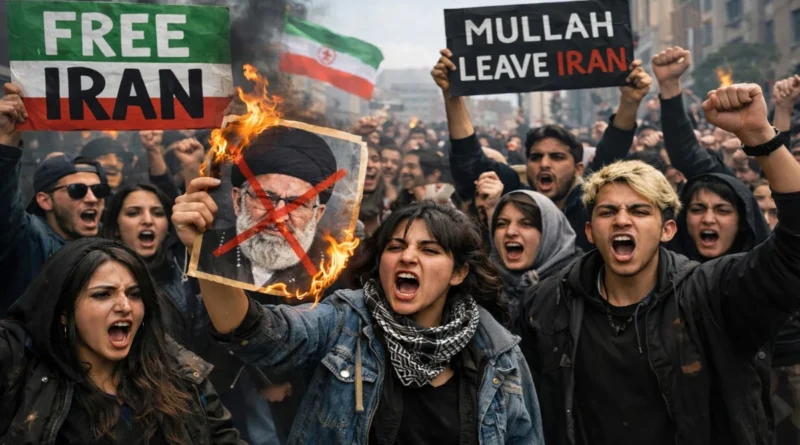
Iran on the Edge: Mass Protests Challenge Religious Hardliners Amid Economic Turmoil
Iran is witnessing a wave of public unrest reminiscent of the 1979 Islamic Revolution, when religious hardliners overthrew a democratically elected government. Today, a similar energy is visible on the streets as ordinary Iranians, frustrated with clerical authoritarianism, are demanding change. Chants like “Mullahs must leave Iran” are echoing openly, signaling a broad-based pushback against the ruling religious establishment. Unlike three years ago, when protests over the compulsory hijab were brutally suppressed by Supreme Leader Ayatollah Ali Khamenei, this movement is gaining momentum not only on the streets but also across social media, drawing in a younger generation, especially Gen Z. The message is clear: authoritarian religious rule is no longer tolerated.
The current unrest, which began on December 28, initially sparked by rising prices and the plummeting value of Iran’s rial, is rapidly transforming into a broader anti-government movement. Protesters have taken to the streets for consecutive days, voicing opposition not just to economic hardships but directly targeting the country’s supreme leadership. Cities like Tehran have become focal points, with universities and commercial districts emerging as centers of resistance. Clashes with authorities have been reported, including arrests, raids on campuses, and, in some instances, the use of tear gas and live ammunition. There are reports of serious injuries, including at least one student in Tehran. Adding fuel to the fire, threats of potential military action from U.S. President Donald Trump have intensified public anger. In response, the government has closed schools and government offices in at least 17 provinces, attempting to suppress the growing dissent.
The international reaction has been noteworthy as well. The U.S. State Department has praised the courage of Iranian citizens, noting that protests have spread across multiple cities, including Mashhad, Isfahan, Zanjan, Hamadan, and Malard. The statements highlighted that ordinary Iranians are bravely voicing their frustration over economic mismanagement, sending a clear signal that the public’s demands cannot be ignored.
This movement reflects a rare convergence of economic grievance and political resistance, signaling that Iran’s streets are once again becoming the stage for demands of freedom and accountability, challenging decades of religious authoritarian rule.