
Balochistan at a Crossroads: Leader Warns India of Possible Chinese Military Presence
Balochistan, a restive region in Pakistan, is once again in the spotlight, with some experts even suggesting that it could one day emerge as the world’s 196th country. Amid this backdrop, prominent Baloch leader Mir Yar Baloch has written an open letter to India’s External Affairs Minister, Dr. S. Jaishankar, raising serious strategic concerns.
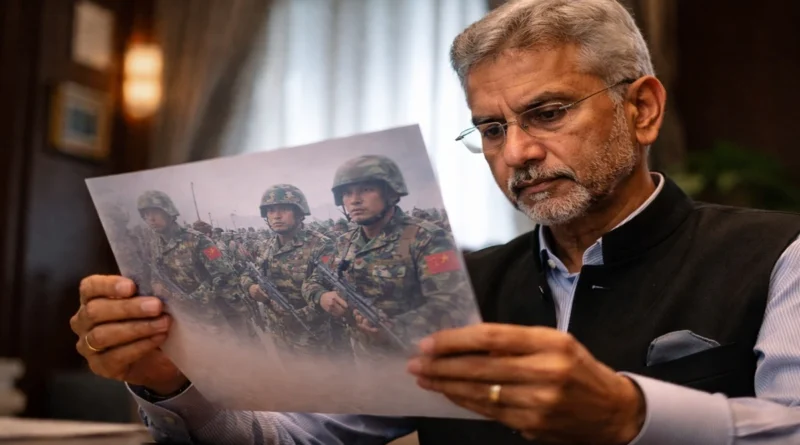
In his letter, Mir Yar cautioned that China may deploy its military forces in Balochistan in the coming months. He warned that such a move would not only endanger the Baloch people but also pose a long-term security challenge for India. According to him, if Balochistan’s defense capabilities continue to be ignored and its security treated with outdated approaches, the likelihood of Chinese troop deployment becomes very real.
He emphasized that the presence of Chinese soldiers on Baloch soil—without the consent of nearly 60 million Baloch people—would be an unimaginable threat to the future of both Balochistan and India.
A Region Shaped by Conflict and Resistance
Geographically, Balochistan shares borders with Afghanistan in the northwest, Iran in the west, and the Arabian Sea to the south. Until 1948, the region existed as a princely state and maintained a distinct identity, separate from British India. In March 1948, Pakistani forces moved in and took control of Balochistan, a move that Baloch nationalists have never accepted.
Since then, the region has witnessed continuous resistance against Pakistani rule. For over 75 years, Baloch groups have fought what they describe as systemic oppression. Thousands of Baloch civilians—men, women, children, and the elderly—have reportedly lost their lives during efforts to suppress the movement. The fear now is that if Chinese forces also enter the region, the Baloch struggle could be further weakened.
Appeal to India and Opposition to China-Pakistan Projects
Mir Yar Baloch also praised the Modi government for “Operation Sindoor,” which targeted terror infrastructure in Pakistan. He stated that the threats faced by India and Balochistan are real and interconnected, and therefore, bilateral engagement must be practical and action-oriented.
In essence, the Baloch leader has urged India to take proactive steps before China establishes a military presence in Balochistan. India has long opposed the China–Pakistan Economic Corridor (CPEC), arguing that it passes through Pakistan-occupied Jammu and Kashmir (PoK) and undermines India’s sovereignty and security.
Recently, Mir Yar also wrote to Prime Minister Narendra Modi, requesting the opening of a Balochistan diplomatic mission in New Delhi. Earlier, in May 2025, he formally declared Balochistan’s independence from Pakistan and appealed to the United Nations to recognize it as a sovereign state under the name “Democratic Republic of Balochistan.” This announcement reportedly caused significant unease within Pakistan’s political and military leadership.
What Lies Ahead?
It is worth noting that during the 1947 partition of India, Balochistan had declared itself independent, only to be annexed by Pakistan the following year. Since then, repeated uprisings have shaken Pakistan’s control over the region.
Now, with renewed calls for independence and warnings of growing Chinese involvement, attention has shifted to New Delhi. The key question remains: how will India respond to Mir Yar Baloch’s appeal, and what role—if any—will it choose to play in Balochistan’s future?