
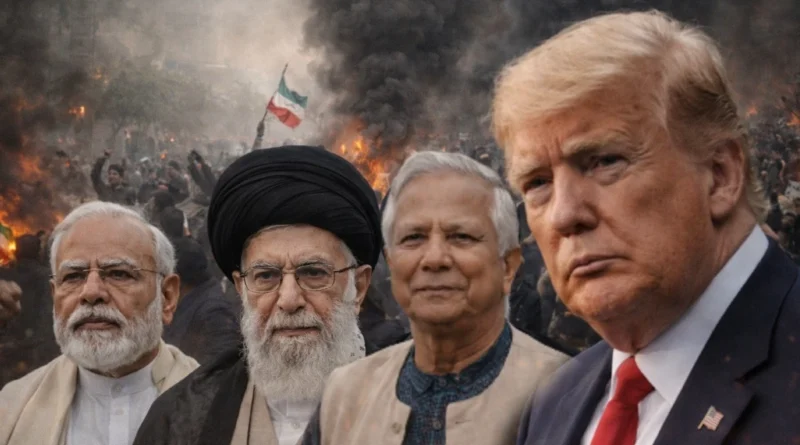
Tensions Rise in Iran as Protests Grow and Trump Issues Stark Warning
Unrest is intensifying in Iran, a close partner of India, as widespread anti-government protests continue to gain momentum. Images emerging from the country show large-scale demonstrations that began over economic hardship but are now clearly shifting toward demands for political change. From Tehran to several other provinces, protests have expanded rapidly, with slogans openly targeting the leadership and calling for the removal of Supreme Leader Ayatollah Ali Khamenei.
Reports suggest that chants such as “Death to the dictator” are being raised, while Iranian security forces have reportedly been given orders to use force, including gunfire, to control the crowds. What initially appeared to be internal dissent is now being seen as a direct challenge to Iran’s top leadership.
A Familiar Pattern Around India’s Neighbors
Observers are pointing out a troubling pattern. Similar political upheavals have recently unfolded in countries friendly to India, including Nepal and Bangladesh. Now, Iran appears to be facing a comparable phase of instability, raising concerns in New Delhi and beyond.
As the protests escalated, the United States stepped in rhetorically. Former US President Donald Trump issued a sharp warning on social media, stating that if Iran uses force against peaceful demonstrators, the United States would step in to support them. He claimed Washington is closely monitoring the situation and would not tolerate violence against protesters.
Trump further asserted that the US is fully prepared and ready to intervene if necessary, signaling a hard-line posture and suggesting that American action could come at any moment if Iran crosses what he described as a red line.
Iran Pushes Back Against US Threats
Iran’s response to Trump’s remarks was swift and forceful. Ali Larijani, a senior advisor to Supreme Leader Khamenei, hit back through a social media post, accusing the US and Israel of orchestrating events behind the scenes. He said Trump’s statement made it clear who was attempting to exploit the unrest.
Larijani emphasized that Iran clearly distinguishes between genuine protesters and violent or disruptive elements. He warned that any American interference in Iran’s internal affairs would destabilize the entire region and seriously harm US interests.
With protests intensifying and international rhetoric heating up, Iran now finds itself at the center of a volatile situation—one that could have far-reaching consequences for regional stability and global geopolitics.