
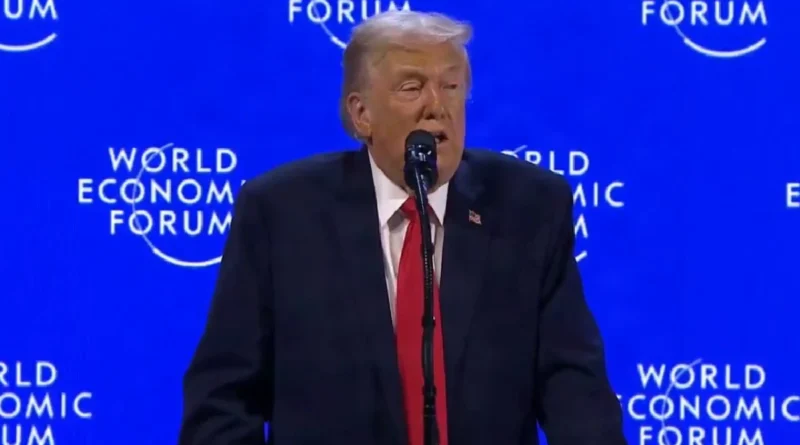
Trump at Davos: Economic Revival at Home, Warnings Abroad
Addressing global leaders at the World Economic Forum in Davos, U.S. President Donald Trump opened his speech by spotlighting what he described as a dramatic economic turnaround in the United States. Striking a confident and combative tone, Trump told the audience that his election had been welcomed by the American public and claimed that just two years ago the country was “economically dead,” but has since staged a strong comeback.
He contrasted this recovery with the situation in parts of Europe, saying that while he has deep affection for the continent, it is not moving in the right direction. According to Trump, some European regions have changed so much that they are barely recognizable. He argued that the United States is now correcting the damage caused by unfair practices from other countries by raising taxes and tariffs on them.
“When America Grows, the World Grows”
Trump highlighted rising income levels and easing inflation in the U.S., calling these developments positive not just for Americans but for the global economy as well. He asserted that the United States functions as the world’s primary economic engine. In his words, when the American economy expands, prosperity spreads globally—but when the U.S. falters, other nations feel the impact just as sharply.
Urging European leaders to rethink their economic approach, Trump encouraged them to adopt policies similar to those pursued by his administration. He criticized Europe’s high government spending, migration policies, and trade regulations, claiming these choices have weakened economic performance across the continent. To regain strength, he argued, Europe needs to follow the same path the United States has taken to revive growth.
Venezuela Cited as an Example of U.S. Pressure
Speaking on the sidelines of the WEF annual meeting, Trump also pointed to Venezuela as a case study of how sustained American pressure can force policy shifts. He claimed that Caracas has recently moved more quickly toward reaching an understanding with Washington and suggested that the country is now positioned to generate more revenue in the coming months than it has in the past two decades.
Trump blamed Venezuela’s long economic decline on flawed domestic policies, arguing that a change in outlook only came after sustained external pressure. Once the pressure eased, he said, Venezuelan leaders were ready to negotiate—adding pointedly that other countries should take note of this approach.
Travel Hiccup and Tariff Threats
Trump’s arrival in Davos followed a brief logistical disruption after a minor technical issue with his aircraft forced him to return to Washington and switch planes. The White House said the delay would not affect his scheduled appearance at the Swiss Alps forum.
At Davos, Trump also reignited trade tensions by warning that the United States may impose steep import tariffs on Denmark and seven other allied nations. He said the proposed duties would begin at 10 percent as early as next month and could rise to 25 percent by June. Such increases, analysts warn, could raise costs, slow economic growth, and potentially undermine Trump’s own goal of reducing the cost of living.
Europe Pushes Back
European leaders reacted cautiously to Trump’s remarks. European Commission President Ursula von der Leyen issued a firm warning that if the United States proceeds with the proposed tariffs, the European Union would respond in a manner that is “decisive, united, and proportionate.”
As Trump’s Davos appearance made clear, his economic message remains consistent: a resurgent America at the center of the global economy, tougher trade policies toward allies and rivals alike, and a belief that U.S. pressure is an effective tool for reshaping international behavior.