
Kashi at the Crossroads: Faith, Fire, and the Fight Over Manikarnika Ghat
“Even the dust of this land is sacred—this city is Banaras.”
Known as Kashi, Banaras, or Varanasi, this ancient city rests on the banks of the Ganga, where spiritual energy, natural beauty, and living tradition come together in a way few places on earth can match. The famed American writer Mark Twain once described Banaras as “older than history, older than tradition, older even than legend—and looks twice as old as all of them put together.”
The very name Kashi comes from the Sanskrit word “Kas,” meaning light or radiance. It is believed to be the place where Lord Shiva’s divine light shines brightest, earning the city its reputation as a center of knowledge and enlightenment. Yet alongside this spiritual glow exists another light—one that never fades. The flames of the cremation pyres along the Ganga, burning day and night at Manikarnika Ghat.
Today, this eternal cremation ground has become the center of intense debate, as large-scale redevelopment efforts spark questions about heritage, faith, and modernization.
Manikarnika Ghat: The Gateway to Liberation
Varanasi has long been a hub of learning, culture, death, and salvation. Revered as a city resting on Lord Shiva’s trident, it awakens daily to the sound of temple bells and the Mangala Aarti from the Kashi Vishwanath Temple. Here, the lines between history and mythology blur, and life and death coexist seamlessly.
Manikarnika Ghat holds a unique place in Hindu belief. It is considered the “gateway to moksha”—the ultimate liberation from the cycle of rebirth. According to legend, an earring (manikarnika) worn by Goddess Sati fell here, giving the ghat its name. Cremations take place here around the clock, a rare and powerful sight that symbolizes the city’s deep relationship with mortality and transcendence.
In 1771, Maharani Ahilyabai Holkar of Indore—an ardent devotee of Lord Shiva—constructed Manikarnika Ghat along with five other ghats, transforming them into permanent stone structures. She also played a key role in restoring the Kashi Vishwanath Temple. For nearly 250 years, the ghat’s form remained largely unchanged.
Development or Destruction? The Current Controversy
The current uproar stems from a government-led modernization project aimed at upgrading Manikarnika Ghat and its surrounding areas. New construction plans require demolition of certain existing structures, triggering protests from locals and religious groups who accuse the authorities of damaging ancient heritage in the name of development.
The government, however, insists the project is essential to meet modern needs while preserving cultural legacy. This debate echoes earlier controversies, particularly in 2019 during the construction of the Kashi Vishwanath Corridor, when nearly 300 homes were demolished. At the time, critics alleged that temples and historic structures were destroyed, while the government argued it was removing encroachments to restore the sanctity of the area.
At the corridor’s foundation ceremony, Prime Minister Narendra Modi—also the Member of Parliament from Varanasi—said he felt “called by Mother Ganga” to free Baba Vishwanath from suffocating encroachments so that the deity could “breathe again.”
What the Manikarnika Redevelopment Involves
The Manikarnika Ghat project, with an estimated budget of ₹28 crore, aims to significantly upgrade facilities. Plans include:
- Construction of 36 modern cremation platforms across two levels
- Installation of three large chimneys
- Development of toilets, wood storage areas, and a waiting hall
- Rebuilding of steps along the ghat
Controversy erupted during the first phase when excavation work allegedly damaged small shrines (madhis) and led to claims that sacred idols were broken.
Yashwant Rao Holkar, president of the Ahilyabai Trust and a representative of the former Indore royal family, traveled to Kashi to express his objections. Touching the sacred soil of Manikarnika to his forehead, he reaffirmed his family’s commitment to protecting Ahilyabai Holkar’s legacy. The trust has given the district administration seven days to hand over all idols associated with Ahilyabai.
The local administration, however, maintains that no heritage has been damaged. Officials claim that the idols—including those of Ahilyabai—are safe and have been placed in secure custody at the Culture Department’s परिसर. They say the idols will be respectfully reinstalled once renovation is complete, as was done during the Kashi Vishwanath Corridor project. A point of contention remains: authorities acknowledge two idols, while the trust claims there are four.
FIRs and the Role of AI-Generated Images
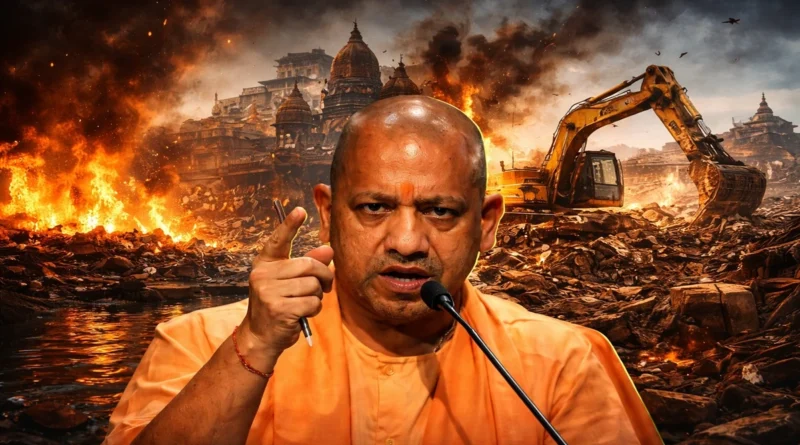
Tensions escalated further after Uttar Pradesh Police filed an FIR against eight individuals for allegedly spreading misinformation using AI-generated images. These images reportedly showed temples being demolished, fueling public outrage. Among those named in the case are two Members of Parliament—AAP’s Sanjay Singh and independent MP Pappu Yadav.
The police action followed a visit by Chief Minister Yogi Adityanath, signaling the government’s intent to clamp down on what it calls deliberate attempts to inflame religious sentiments through false visuals.
A City Balancing Eternity and Change
The controversy at Manikarnika Ghat reflects a deeper struggle faced by Kashi itself—how to modernize without erasing the soul of one of the world’s oldest living cities. For some, the redevelopment promises dignity, safety, and better facilities at a sacred site. For others, it represents an irreversible break from tradition and history.
As flames continue to burn on the ghats and prayers rise with the Ganga’s mist, the debate remains unresolved—caught between preservation and progress, faith and function, eternity and change.