
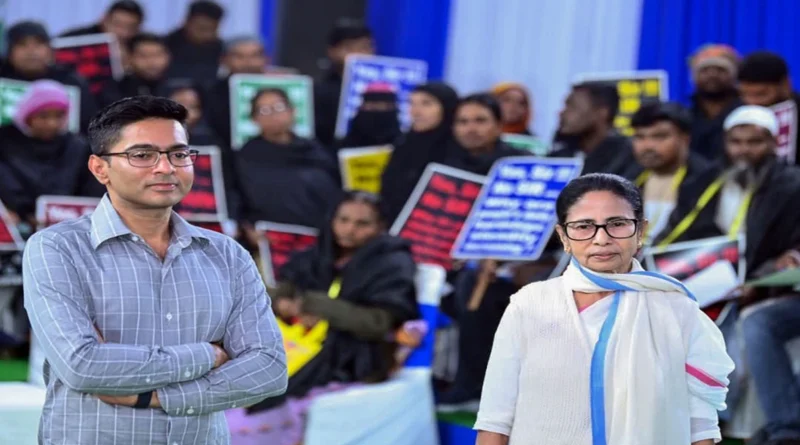
Supreme Court Weighs West Bengal Voter Roll Review as Mamata Banerjee Flags Risk of Mass Disenfranchisement
The Supreme Court on Monday heard an emotionally charged challenge to the Special Intensive Revision (SIR) of electoral rolls underway in West Bengal, with Chief Minister Mamata Banerjee personally addressing the court. She alleged that, ahead of elections, large numbers of voters were being wrongly removed from the rolls, raising serious concerns about democratic fairness.
A Bench led by the Chief Justice took up multiple petitions, including one filed by the West Bengal government, highlighting alleged irregularities in the SIR process, the severe shortage of time, and questions over how the exercise was being conducted. The court noted that the revision is operating under a strict deadline, which had already been extended by ten days, leaving just four days remaining.
“We cannot grant another week,” the Chief Justice observed, while stressing that the process must still ensure that no innocent citizen is unfairly deprived of the right to vote. He underlined that every problem must have a solution, particularly when fundamental democratic rights are at stake.
Appearing for the petitioners, senior advocate Shyam Divan laid out what he described as serious operational flaws in the revision exercise. He placed data before the court indicating that around 32 lakh voters had been marked as “invalid,” while nearly 1.36 crore entries—about 20 percent of the electorate—had been flagged under a “logical inconsistency” list. In addition, he said, hearings in nearly 63 lakh cases were still pending.
Divan also questioned the appointment of 8,300 micro-observers, arguing that they lacked statutory backing and were allegedly rejecting valid documents such as Aadhaar cards, residence certificates, and caste certificates. Responding to concerns about communication with voters, the Chief Justice clarified that the voter list was not the sole means of outreach and that individual notices were also being issued.
On behalf of the Election Commission of India (ECI), senior advocate Rakesh Dwivedi defended the process. He told the court that all notices clearly state the reasons for action and that voters are permitted to act through authorised agents. Dwivedi also justified the deployment of micro-observers, explaining that despite repeated requests, the state government had failed to provide an adequate number of Group B (gazetted) officers, leaving the Commission with no alternative.
As the clock runs down on the SIR deadline, the case has brought the spotlight firmly on the balance between administrative efficiency and the protection of voting rights—an issue the court made clear cannot be compromised, even under tight timelines.