
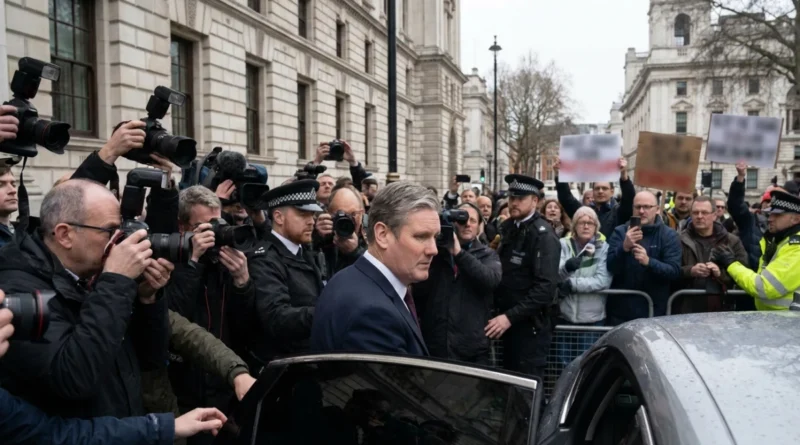
Epstein Links Spark Political Storm Around UK Prime Minister Keir Starmer
British Prime Minister Keir Starmer has never personally met convicted sex offender Jeffrey Epstein, yet the widening fallout from Epstein’s connections with powerful global figures is now casting a shadow over Starmer’s leadership. As fresh disclosures surface about Epstein’s close ties with prominent individuals, political pressure is mounting on Starmer and his centre-left Labour government.
Several high-profile figures have already faced consequences over their associations with Epstein. Among them are Britain’s former royal Prince Andrew and Peter Mandelson, a senior Labour leader who previously served as the UK’s ambassador to the United States. Mandelson’s name re-emerged in newly released documents that suggest a far closer relationship with Epstein than previously acknowledged, sending shockwaves through British politics.
Mandelson’s Exit and Questions Over Judgment
Starmer had earlier removed Mandelson from his position after revelations about his friendship with Epstein came to light. However, the controversy has refused to die down. Instead, it has intensified—raising serious questions about Starmer’s judgment, particularly his decision in 2024 to appoint Mandelson despite lingering concerns about Epstein-related links.
With the release of recent documents indicating repeated contact and proximity between Epstein and Mandelson, critics within and outside the Labour Party have begun to question whether Starmer exercised due diligence. The issue has now evolved from an individual scandal into a broader test of leadership credibility.
Public Apology to Victims
On Thursday, Starmer issued a direct apology to survivors of Epstein’s abuse, acknowledging that the situation had caused renewed pain and distress. He admitted that Mandelson had misled him by denying any real association with Epstein and expressed regret for accepting those assurances.
Addressing the victims, Starmer said he was sorry for what they endured at the hands of powerful individuals, apologized for believing Mandelson’s false statements, and acknowledged the harm caused by reopening these wounds in the public eye. His remarks were intended to demonstrate accountability, but they have done little to calm the political storm.
Threat to Leadership and Government Stability
Political analysts warn that the controversy could pose a serious threat to Starmer’s position as prime minister. Rob Ford, Professor of Political Science at the University of Manchester, described the situation as deeply damaging. According to him, Starmer is under intense pressure, and while his government may survive for months—or even years—its moral authority has taken a significant hit.
Ford noted that even if the administration does not collapse immediately, Starmer’s reputation has suffered long-term damage that could undermine his ability to govern effectively.
Growing Dissent Within Labour Party
Discontent is also brewing within Starmer’s own party. Labour MP Paula Barker openly criticized the prime minister’s decision-making, stating that the episode has exposed serious flaws in his judgment. Speaking to the BBC, she said Starmer must now provide clear answers and work hard to rebuild trust—not only with the public but also within the Labour Party itself.
According to Barker, restoring confidence will be a long and difficult process, requiring transparency, accountability, and a renewed commitment to ethical leadership.
A Defining Moment for Starmer
While Starmer has sought to distance himself from Epstein and take responsibility for errors in judgment, the controversy has become a defining moment for his premiership. As new revelations continue to emerge, the question facing British politics is no longer just about past associations—but whether Starmer can regain trust and steady his government amid one of its most serious crises yet.