
India–France Defence Deal Set to Redefine Air Power, Sending a Strong Message to Adversaries
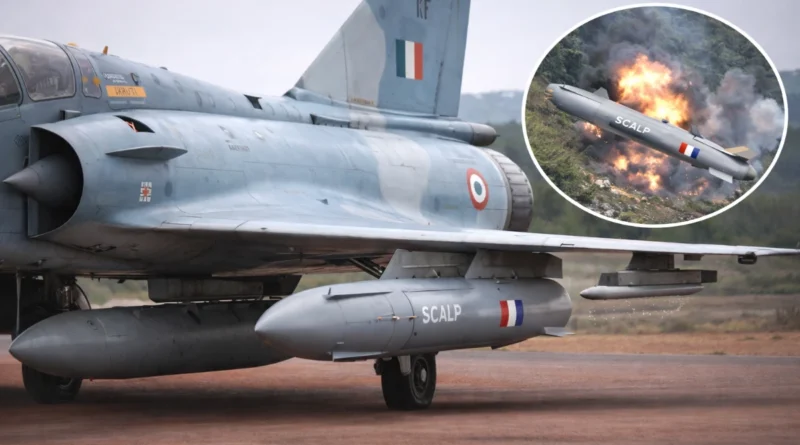
India and France are on the verge of sealing a major defence agreement—one powerful enough to rattle adversaries and significantly boost India’s aerial strike capabilities. After showcasing its military strength during last year’s Operation Sindoor, the Indian Air Force (IAF) is now preparing to procure long-range SCALP cruise missiles at an estimated cost of 300 million euros (around ₹2,700 crore).
This upcoming deal is not just about buying missiles; it represents a decisive upgrade in India’s ability to conduct deep, precise, and devastating strikes when required.
Operation Sindoor: A Demonstration of Raw Firepower
On the night of 6–7 May last year, India launched Operation Sindoor, marking its most significant cross-border military action since the 2019 Balakot airstrikes. The operation sent a clear message about India’s readiness and resolve.
- Terror infrastructure destroyed: SCALP missiles, fired from Rafale fighter jets, were used to obliterate key headquarters of Jaish-e-Mohammed and Lashkar-e-Taiba in Muridke and Bahawalpur in Pakistan.
- Strikes on Pakistani airbases: The operation went beyond targeting terrorist camps. The Indian Air Force also hit 12 major Pakistani airbases, damaging fighter aircraft and surveillance platforms stationed there.
The success of these strikes reinforced the effectiveness of precision-guided, long-range weapon systems in modern warfare.
What Makes the SCALP Missile So Deadly?
The SCALP missile, also known as Storm Shadow, is an air-to-surface cruise missile designed for deep-strike missions. Its key strengths make it a formidable weapon in India’s arsenal:
- Long-range precision: With a strike range exceeding 250 kilometres, SCALP can destroy high-value targets with pinpoint accuracy, all while keeping the launch aircraft safely out of enemy air-defence range.
- Bunker-buster capability: The missile is specifically engineered to destroy underground bunkers, command centres, and ammunition depots, making it ideal for neutralising hardened enemy infrastructure.
- Low-altitude, radar-evading flight: SCALP flies extremely close to the ground, allowing it to evade enemy radar systems and air-defence networks until it is too late to react.
Rafale Set to Become the IAF’s True “Rockstar”
The SCALP deal is part of a much larger plan to transform India’s air power into a highly lethal, technology-driven force:
- Advanced missile arsenal: Alongside SCALP, India is also inducting large numbers of Meteor air-to-air missiles, giving Rafale jets unmatched long-range air-combat superiority.
- 26 Rafale Marine jets: The Indian Navy will receive 26 Rafale-M aircraft, expected to join the fleet over the next 3–4 years, significantly enhancing carrier-based operations.
- 114 additional Rafales for the IAF: The Air Force plans to acquire 114 more Rafale jets. Over the next 10–15 years, India could operate nearly 200 Rafale aircraft, making them the backbone of the country’s air combat strength.
A Major Boost to India’s Strike Capability
Defence officials indicate that the final approval for this high-value deal could come soon. Once completed, the acquisition will dramatically enhance India’s deep-strike, precision-attack, and deterrence capabilities.
In short, India’s air power is entering a far more lethal phase—one that leaves little doubt about the country’s ability to strike hard, strike deep, and strike decisively.