
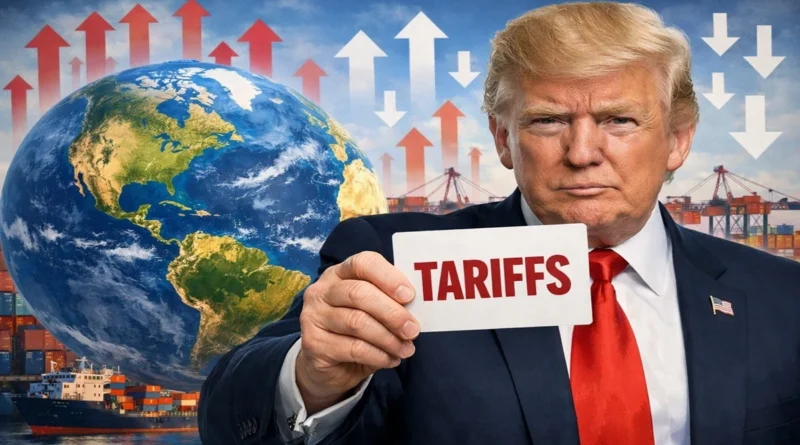
Trump Blasts Supreme Court After Tariff Ruling, Announces Additional 10% Duties on Most Countries
U.S. President Donald Trump has strongly criticized the Supreme Court following its decision declaring his emergency tariffs unlawful. Trump called the ruling “shameful” and claimed it was contrary to the interests of the United States, signaling that he remains determined to protect American trade priorities by other means.
Supreme Court Strikes Down Tariffs
The U.S. Supreme Court, in a 6-3 majority decision, ruled that President Trump exceeded his powers under the 1977 International Emergency Economic Powers Act (IEEPA) by imposing broad reciprocal tariffs. The Court held that using the law in this manner went beyond the authority granted to the President.
In its ruling, the Court warned that the United States cannot engage in trade conflicts with every nation simultaneously and emphasized that the tariff program represented an overreach of executive power. The decision effectively dealt a blow to Trump’s administration and its aggressive trade strategy.
Trump’s Response: More Tariffs on the Way
Unfazed by the setback, President Trump announced in a press conference that he would impose an additional 10% tariff on goods from most countries, while keeping India exempt from this move. He stressed that, despite the Supreme Court ruling, he has alternative tools at his disposal and will continue to leverage tariffs to protect U.S. economic and security interests.
“The Supreme Court’s decision is wrong. It is shameful. But it does not stop me. I have other options, and I will use them. I can impose more tariffs — and I will,” Trump said.
Implications for India and Global Trade
The Supreme Court decision comes as a relief for India, which was negotiating an interim trade deal with the U.S. under which 18% tariffs were still under discussion. With the ruling, India now has an opportunity to push for further reductions on certain U.S. tariffs as part of ongoing trade negotiations.
Additionally, the Trump administration may face a lengthy and complex process of refunding duties collected from companies under the previously imposed tariffs. Last year, Trump had justified the tariffs by citing extraordinary threats to U.S. national security and economic interests arising from trade deficits and stringent regulations abroad.
Political and Economic Fallout
The tariff ruling highlights the tension between executive action and judicial oversight in U.S. trade policy. While Trump remains combative and signals more measures ahead, companies and trading partners must navigate the uncertainty caused by these legal and policy shifts.
As the situation develops, all eyes are on how the administration will implement alternative tariffs and whether these measures will impact ongoing trade negotiations, especially with countries like India that were negotiating interim agreements.
In short, the Supreme Court ruling has paused one chapter of Trump’s trade strategy, but the President’s aggressive approach suggests that tariffs, in some form, are far from over.