
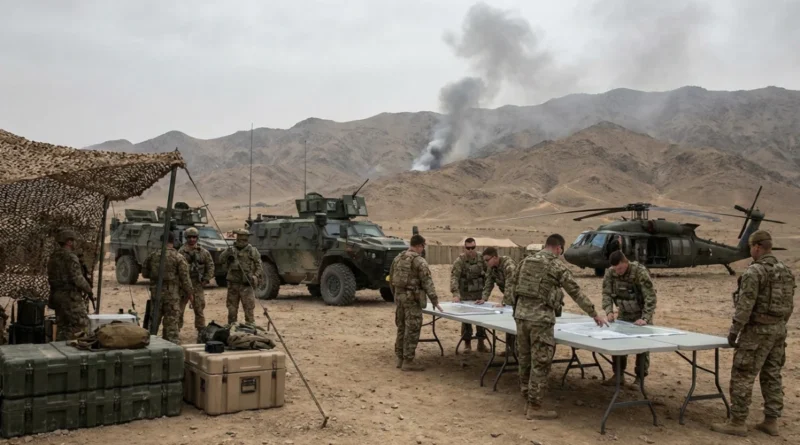
Cross-Border Tensions Escalate as Pakistan Claims Strikes on Militant Camps in Afghanistan
Tensions between Pakistan and Afghanistan have sharply intensified after Islamabad announced it had carried out targeted military operations across the border, claiming the elimination of at least 70 militants. The strikes, described as retaliatory measures, were launched in response to a recent wave of deadly attacks inside Pakistan.
Retaliation After Deadly Attacks
Speaking on Geo News, Pakistan’s Minister of State for Interior, Talal Chaudhry, asserted that Afghanistan has long served as a breeding ground for extremist elements targeting Pakistan. He emphasized that the government is committed to protecting the lives and property of its citizens, and would not hesitate to act when national security is at stake.
According to Chaudhry, a majority of those killed in the cross-border operation were Pakistani nationals. He stated that authorities possess substantial evidence confirming the identities of the militants involved.
The strikes followed a series of recent suicide bombings in Islamabad, Bajaur, and Bannu. In the latest incident, a suicide attack in the Bannu region of Khyber Pakhtunkhwa claimed the lives of a Pakistan Army lieutenant colonel and a soldier. Islamabad maintains that these attacks were orchestrated by militant networks operating from Afghan territory.
Targeted Camps and Militant Groups
In an official statement, Pakistan’s Information and Broadcasting Ministry confirmed that intelligence-based operations had struck seven alleged militant camps and hideouts near the Pakistan-Afghanistan border. The targets were described as linked to the banned Tehrik-i-Taliban Pakistan (TTP), which the government refers to as “Fitna-al-Khawarij,” as well as its affiliates and the regional branch of the so-called Islamic State, Islamic State – Khorasan Province (ISKP).
Islamabad argues that these groups have been responsible for a string of attacks, including a recent assault on a Shia mosque in the capital and the suicide bombing in Bannu. Officials have repeatedly urged the Afghan Taliban administration to prevent militant organizations and foreign operatives from using Afghan soil to stage attacks against Pakistan. However, the ministry claimed that Kabul has failed to take meaningful action.
Reaffirming its position, Pakistan called on the interim Afghan authorities to uphold their commitments, including obligations under the Doha Agreement, which requires Afghan territory not to be used for hostile activities against other nations. Islamabad also urged the international community to press the Taliban government to honor these commitments, stressing that regional and global stability depend on it.
Kabul Warns of “Measured Response”
Kabul responded swiftly, warning that the strikes on Paktika and Nangarhar provinces would not go unanswered. Afghanistan’s Defense Ministry described the attacks as a violation of national sovereignty, international law, and the principles of good neighborly relations.
In a strongly worded statement, Afghan officials accused Pakistan of targeting civilian areas and religious centers, labeling the strikes a breach of Islamic values and a reflection of intelligence and security failures within Pakistan itself. Kabul insisted that safeguarding its borders and citizens is both a national and religious duty, and pledged a “necessary and considered response” at an appropriate time.
A Relationship Under Strain
Relations between Pakistan and the Afghan Taliban administration have steadily deteriorated over the past year. Islamabad has consistently accused Kabul of failing to curb militant activity emanating from its territory. In October last year, tensions briefly escalated into armed clashes along the border, resulting in significant casualties on both sides. Pakistani officials reported that 23 of their soldiers and over 200 Afghan Taliban fighters were killed in that confrontation.
As accusations and counter-accusations mount, the fragile relationship between the two neighbors appears increasingly strained. While Pakistan frames its recent actions as essential for national security, Afghanistan views them as infringements on sovereignty. With both sides standing firm, the risk of further escalation looms, raising concerns about broader regional stability in an already volatile landscape.