
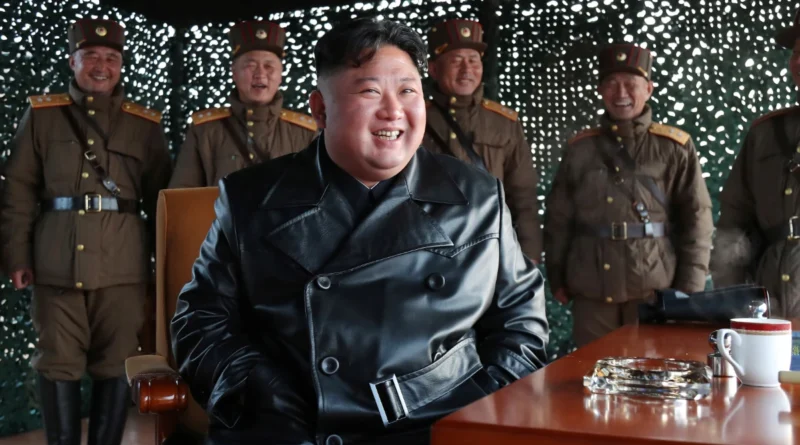
Kim Jong Un Reappointed Unanimously as Party Chief, Signaling Tougher Nuclear Posture
In a move that surprised no one but unsettled many, Kim Jong Un has once again been unanimously elected as General Secretary of the ruling Workers’ Party of Korea. The announcement, delivered Monday by state media outlet Korean Central News Agency (KCNA), confirmed that thousands of party delegates endorsed Kim’s leadership without opposition.
While the outcome itself was widely anticipated, the symbolism behind it has reignited global concern. Observers see the reappointment not merely as a routine political procedure, but as a reaffirmation of Kim’s aggressive nuclear ambitions—an arsenal that has reshaped the security landscape from East Asia to the United States.
A Congress with Strategic Undertones
The Party Congress, which began last Thursday, serves as a key platform for charting North Korea’s political and military direction for the next five years. Analysts expect Kim to use this new term to outline a sharper, more assertive national defense strategy—one centered on accelerating the country’s nuclear weapons program.
North Korea already possesses missiles capable of reaching U.S. allies in Asia and potentially the American mainland. Experts believe Kim may now seek to further modernize these capabilities while integrating them more closely with conventional military forces. Such a move would mark a significant doctrinal shift, blending traditional military strength with nuclear deterrence in a more systematic way.
Strengthening Power at Home and Abroad
Beyond the military sphere, Kim is also expected to reinforce his long-standing narrative of “self-reliance.” Despite international sanctions, North Korea has reportedly benefited from arms exports to Russia and increased trade engagement with China. These developments have provided Pyongyang with economic breathing space, which Kim may leverage to justify renewed emphasis on domestic resilience and strategic autonomy.
State media portrayed Kim’s reelection as the “unanimous will” of the delegates, crediting him with expanding North Korea’s regional influence and fortifying its nuclear deterrent. The tone of the coverage framed his leadership as indispensable to the country’s survival and strength.
Diplomatic Freeze and Rising Tensions
The geopolitical backdrop to Kim’s renewed mandate is one of prolonged diplomatic stalemate. Talks between Pyongyang and Washington collapsed in 2019 after negotiations with then U.S. President Donald Trump failed to produce a breakthrough. Since then, formal dialogue between North Korea, the United States, and South Korea has remained largely dormant.
In 2024, Kim formally declared South Korea a “permanent enemy,” institutionalizing an already hostile relationship. Analysts warn that his latest term could harden this stance further, embedding confrontation more deeply into North Korea’s long-term policy framework.
A More Dangerous Chapter Ahead?
Security experts caution that Kim’s renewed leadership may usher in a more assertive and potentially volatile era. With nuclear capabilities expanding and conventional forces being recalibrated to work in tandem with strategic weapons, North Korea appears poised to double down on deterrence through strength.
While Pyongyang frames its actions as necessary for national sovereignty and survival, the broader international community views the developments with unease. As Kim Jong Un consolidates power once again, the message from Pyongyang is unmistakable: North Korea’s nuclear ambitions are not slowing down—they are entering a new phase.