
‘El Mencho’ Killed in Mexican Military Operation, Triggering Nationwide Violence
One of the world’s most feared and sought-after drug traffickers, Nemesio Oseguera Cervantes — better known as “El Mencho” — has died following a Mexican military operation, according to official confirmation from Mexico’s Defense Ministry.
Authorities said Oseguera was critically wounded during a raid in the western state of Jalisco. He succumbed to his injuries while being transported to Mexico City for treatment. His death marks a dramatic turning point in Mexico’s long and bloody struggle against organized crime.
Cartel Retaliation Engulfs Multiple States
News of El Mencho’s death spread rapidly — and so did the violence. Fighters linked to his powerful organization, the Jalisco New Generation Cartel (CJNG), unleashed coordinated attacks across more than half a dozen Mexican states.
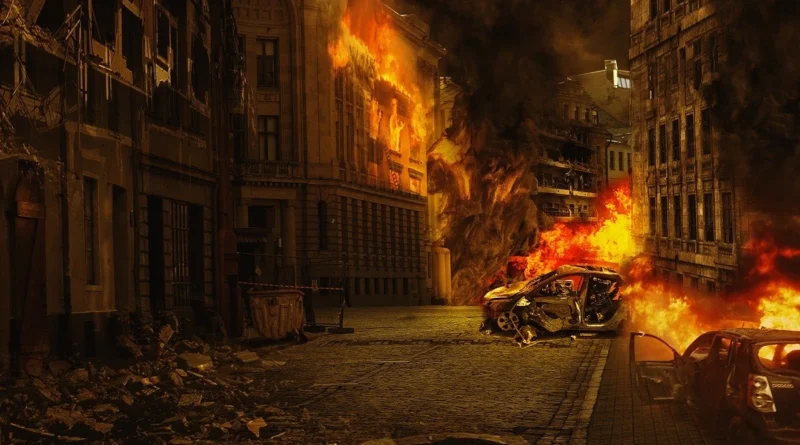
Gunmen blocked major highways, torched dozens of vehicles, and created chaos in key urban centers. Thick plumes of smoke were seen rising over the popular tourist destination of Puerto Vallarta, while in Guadalajara — Jalisco’s capital — burning vehicles were used to barricade streets.
Videos circulating on social media showed frightened travelers scrambling inside airport terminals amid fears of escalating violence. Jalisco Governor Pablo Lemus Navarro urged residents to remain indoors until authorities could restore order.
President Claudia Sheinbaum stated that the federal government was working in full coordination with state authorities to contain the unrest.
A Cartel That Rose to National Dominance
Under Oseguera’s leadership, CJNG transformed from a regional criminal group into Mexico’s most formidable organized crime syndicate over the past decade. The cartel became a major supplier of illegal drugs — including cocaine, methamphetamine, and fentanyl — to the United States.
The operation against Oseguera came amid heightened pressure from Washington. The administration of former U.S. President Donald Trump had previously pushed Mexico to intensify its crackdown on drug trafficking networks. The United States had offered a $15 million reward for information leading to El Mencho’s capture or conviction, accusing him of orchestrating massive narcotics shipments into North America.
CJNG had also been designated a foreign terrorist organization by U.S. authorities, underscoring the severity of the threat it was perceived to pose.
U.S. Deputy Secretary of State Christopher Landau described Oseguera’s killing as a significant development not only for the United States and Mexico, but for the broader Latin American region.
Security Alerts Issued
As violence flared in cartel strongholds, the U.S. State Department issued security alerts advising American citizens to shelter in place in several Mexican states, including Jalisco, Tamaulipas, Michoacán, Guerrero, and Nuevo León. Canadian authorities issued similar advisories, urging their citizens in Puerto Vallarta to remain indoors and maintain a low profile across Jalisco.
The Rise of a Ruthless Network
Though often less internationally recognizable than Joaquín “El Chapo” Guzmán of the Sinaloa Cartel, CJNG carved out a reputation for extreme brutality and rapid territorial expansion. The group became notorious for deploying military-style convoys, using heavy weaponry, and staging public displays of violence to intimidate rivals and authorities alike.
El Mencho’s death represents a symbolic victory for Mexican security forces. Yet the ferocity of the cartel’s immediate response highlights a persistent reality: dismantling leadership does not instantly dissolve the networks they built.
As Mexico braces for possible further reprisals, the country finds itself once again confronting the enduring challenge of organized crime — even in the wake of one of its most notorious kingpins falling.