
From Ukraine to West Asia, Modi Calls for Dialogue Over War
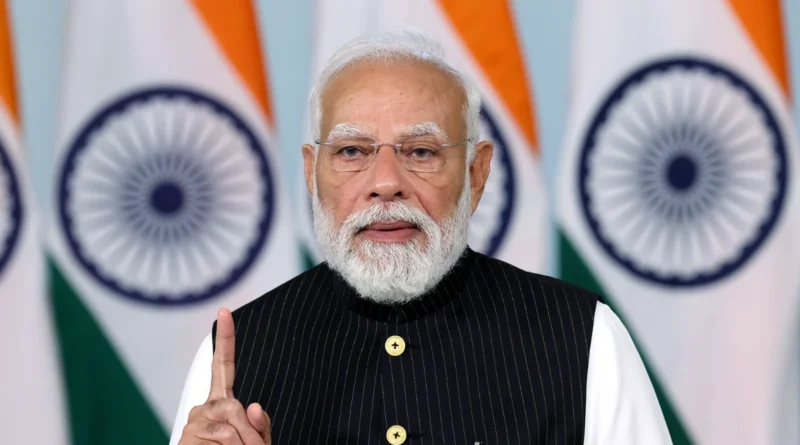
Narendra Modi said that India and Finland share a strong commitment to the rule of law, dialogue, and diplomacy. He emphasized that disputes cannot be resolved through military confrontation, adding that this principle applies equally to the situations in Ukraine and West Asia.
Narendra Modi on Thursday called for an early end to the ongoing conflicts in Ukraine and the escalating tensions involving the United States, Israel, and Iran, stressing that dialogue and diplomacy remain the only viable path to resolving disputes. His remarks come amid rising instability in the Middle East following strikes on Iran on February 28, which triggered retaliatory actions from Tehran and heightened regional tensions.
Speaking at a joint press conference in New Delhi with Alexander Stubb, the President of Finland, Modi highlighted the shared commitment of both nations to the rule of law, dialogue, and diplomatic engagement. He reiterated that military confrontation cannot resolve international disputes and said this principle applies equally to the crises unfolding in Ukraine and West Asia. The prime minister expressed hope for an early end to these conflicts and reaffirmed India’s support for initiatives aimed at achieving long-term peace.
Modi also pointed to the broader global instability, noting that conflicts from Ukraine to the Middle East have created an atmosphere of uncertainty around the world. In this context, he said India and Europe are entering what he described as a “golden era” of partnership aimed at strengthening global stability and shared prosperity. According to him, cooperation between the two major diplomatic powers can provide new momentum for international stability, development, and economic growth.
His comments come at a time when two major geopolitical crises—the ongoing war between Russia and Ukraine in Europe, and the growing confrontation involving the United States, Israel, and Iran in the Middle East—have intensified global tensions, disrupted economies, and raised fears of a wider geopolitical crisis.
Background: The Ukraine War
The war in Ukraine began in February 2022 when Russia launched a full-scale invasion of its neighbor, sparking the largest conflict in Europe since World War II. Over the past four years, the war has resulted in thousands of deaths and displaced millions of people. Kyiv has received substantial military and financial assistance from the United States and several European nations.
Moscow’s invasion followed years of tension over Ukraine’s growing ties with Western countries and its ambitions to join the NATO. Despite diplomatic initiatives and mediation efforts by multiple countries, including the United States, the conflict has remained locked in a prolonged and exhausting war with no clear resolution in sight.