
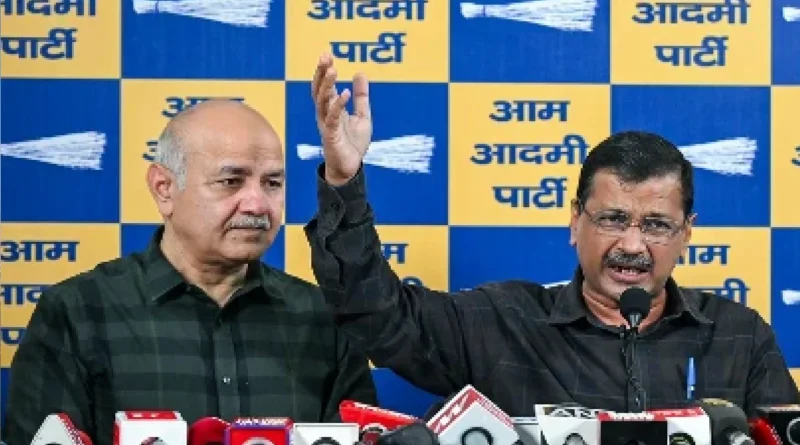
Kejriwal Approaches SC Following High Court Dismissal
On March 11, both parties submitted an application to Chief Justice Devendra Kumar Upadhyay, expressing “serious concerns” about impartiality. The Chief Justice dismissed the application, stating that the matter was in line with the court’s schedule and that there was no administrative basis for reassignment.
Former Delhi Chief Minister Arvind Kejriwal and Aam Aadmi Party (AAP) leader Manish Sisodia have filed a petition in the Supreme Court of India challenging the Delhi High Court Chief Justice’s refusal to transfer the Central Bureau of Investigation (CBI) case on the excise policy to a different bench, originally presided over by Justice Swarn Kant Sharma. On March 11, the two submitted an application to Chief Justice Devendra Kumar Upadhyay expressing “serious apprehensions” regarding impartiality. The Chief Justice dismissed the plea, noting that the case was assigned according to the court’s roster and that there was no administrative basis for reallocation.
The CBI petition, listed before Justice Sharma on March 16, challenges the February 27 acquittal by a lower court of Kejriwal, Sisodia, and 21 others in an alleged scam involving preferential treatment of liquor license holders.
Background: Excise Policy Investigation
The 2021 Delhi Excise Policy, now revoked, aimed to privatize liquor sales to boost revenue but faced allegations of irregularities, bribery, and losses to the government treasury. Following these allegations, the Lieutenant Governor ordered investigations by the CBI and the Enforcement Directorate (ED). While the lower court acquitted the accused, criticizing certain findings of the CBI, Justice Sharma on March 9 issued notices to all 23 respondents, stayed departmental action against the CBI investigator, highlighted apparent errors in the lower court’s observations, and suspended related proceedings under the Prevention of Money Laundering Act (PMLA). These steps bolstered AAP’s claims of bias.
Kejriwal’s Concerns and High Court Response
In their petition, Kejriwal argued that Justice Sharma’s prior orders, issued without hearing the accused, violated principles of impartiality—especially given that some relevant High Court decisions had previously been overturned by the Supreme Court. Chief Justice Upadhyay responded that the petition had been assigned according to the current roster and that any decision to recuse or transfer the case rested with the presiding judge. “I see no reason for reassignment,” he added. AAP confirmed receipt of the High Court communication, while Kejriwal also opposed Justice Sharma’s March 9 order that stayed certain lower court observations without hearing the accused.
Supreme Court Petition and Next Steps
Filed under Article 32, the Supreme Court petition seeks immediate listing before a bench headed by the Chief Justice, aiming for a “clearly impartial” hearing, potentially as soon as tomorrow. The move escalates tensions ahead of Justice Sharma’s scheduled hearing and highlights AAP’s strategy of questioning judicial assignments in this high-profile corruption case.