
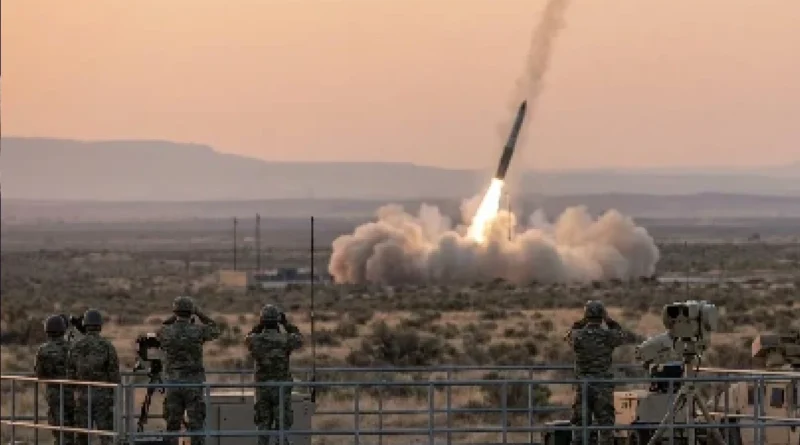
Iran’s Missile and Drone Arsenal Severely Hit by Israeli Attacks, War Strategy in Question
According to intelligence sources, nearly three-quarters of Iran’s missile systems have been destroyed or rendered inoperable through precision strikes on both mobile and fixed launch sites. It is believed that only around 100–180 launchers remain operational, significantly limiting Iran’s ability to carry out large-scale missile attacks.
Benjamin Netanyahu, Prime Minister of Israel, has claimed that Iran’s strategic military capabilities have been “completely destroyed” following sustained air and missile strikes carried out by Israel and the United States. The attacks have reportedly inflicted heavy damage on Iran’s missile forces, drone infrastructure, air-defense systems, and nuclear facilities.
According to senior intelligence sources, the scale and precision of the strikes have significantly reduced Tehran’s ability to conduct sustained long-range attacks, although limited short-term strikes may still be possible.
Before the escalation of the conflict, Iran was estimated to possess 410–500 ballistic missile launchers. Intelligence assessments now indicate that nearly three-quarters of these systems have been destroyed or disabled through precision strikes targeting both mobile and fixed launch sites. Only about 100–180 launchers are believed to remain operational, drastically limiting Iran’s capacity to launch large-scale missile attacks.
A similar decline has been observed in Iran’s missile stockpile and launch rate. Prior to the war, Iran was estimated to have 2,500–3,000 ballistic missiles. Since hostilities intensified, more than 500 missiles have been launched, while hundreds have reportedly been destroyed in targeted strikes. Intelligence sources estimate that the rate of missile launches has fallen by around 90–92 percent compared with the early days of the conflict. Overall, Iran’s ballistic missile capability is now assessed to be only about 8–10 percent of its pre-war strength, making sustained large-scale attacks virtually impossible.
Iran’s drone warfare capability has also suffered major setbacks. Before the conflict, Tehran was believed to possess thousands of drones. Since then, more than 2,000 drones have reportedly been destroyed, and launch rates have dropped by 83 to 95 percent. Airbases and command centers that supported drone operations have sustained heavy damage, forcing Iran to rely on smaller deployments using simpler and less capable drone models.
A key phase of the campaign—reportedly codenamed Operation Rising Lion—was aimed at dismantling Iran’s military-industrial infrastructure. Missile and drone production lines, component factories, storage depots, and associated supply chains were systematically targeted. Intelligence sources say that major industrial sites involved in manufacturing missiles, drones, and critical components have been heavily damaged or destroyed, severely weakening Tehran’s ability to rebuild its arsenal.
The strikes also extended to Iran’s nuclear infrastructure. Facilities at Natanz Nuclear Facility and Fordow Fuel Enrichment Plant reportedly suffered extensive damage to centrifuges, power systems, and operational halls. As a result, uranium enrichment activities have largely come to a halt, and surface-level and access infrastructure has been severely damaged.
Additional strikes were reported at the Isfahan Uranium Conversion Facility and the Taleghan Test Site. Components associated with nuclear weapons development and missile industries were also targeted. Intelligence officials believe the damage could delay Iran’s reconstruction efforts by several years.