
Iran Strikes Back at the United States, Warship Withdrawn Amid Escalating Conflict and Widespread Destruction
Why was the aircraft carrier ultimately forced to withdraw, and is pressure on the United States actually increasing? Iran has claimed that it targeted one of the world’s most advanced stealth fighter jets, the Lockheed Martin F‑35 Lightning II, and has also released a video to support its claim.
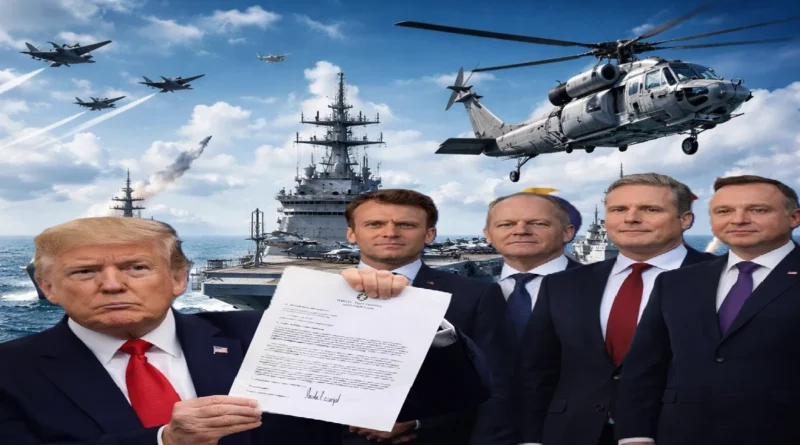
Iran has reportedly targeted two of the most significant symbols of military power of the United States at the same time. One claim involves the world’s most advanced stealth fighter jet, the Lockheed Martin F-35 Lightning II, which Iran says it targeted with a missile. The second development concerns the withdrawal of the powerful US aircraft carrier USS Gerald R. Ford from the conflict zone. If both claims are accurate, analysts say it would represent a direct challenge by Iran to a global superpower rather than just another war update.
Iran has asserted that it launched a missile at the F-35 and even released a video to support its claim. However, the United States has responded cautiously. According to US officials, the aircraft did make an emergency landing but they have not confirmed that the jet was shot down. In other words, while possible damage has been acknowledged, there is no confirmation that the stealth fighter was destroyed. The F-35 is a fifth-generation stealth aircraft designed to evade radar detection and strike targets without being easily detected. If Iran truly managed to track or damage such an aircraft, it would represent a significant blow to one of America’s most advanced military technologies.
At the same time, reports have emerged that the US aircraft carrier USS Gerald R. Ford, which had been deployed near Israel, was suddenly withdrawn from the area. Shortly after its withdrawal, an oil refinery near Haifa reportedly came under attack. The timing of these events has raised questions and added to the speculation surrounding the situation.
The USS Gerald R. Ford is considered one of the largest and most advanced aircraft carriers in the world. Weighing around 100,000 tons and capable of carrying up to 90 fighter jets, the nuclear-powered vessel plays a crucial strategic role in US naval operations. Its withdrawal from an active conflict zone is therefore not seen as just a technical development but also as a potential strategic signal. Some reports suggest the ship was pulled back due to a fire and technical issues that required repairs.
The biggest question, however, revolves around Iran’s claim about targeting the F-35. If the jet is designed to be nearly invisible to radar, how could it have been tracked? One theory suggests that Iran may have used heat-tracking systems, which detect thermal signatures rather than radar signals. While stealth aircraft can evade radar detection, they still produce heat that advanced sensors can potentially identify. If such a method was successfully used, it could challenge current assumptions about stealth technology.
Strategically, analysts believe Iran may be trying to prolong the conflict and gradually exhaust the United States. Meanwhile, Washington appears to be adjusting its military strategy by rotating or replacing carriers and deploying additional forces to the Middle East rather than withdrawing from the region. This raises a larger debate: is US military dominance facing new challenges, and could even advanced systems like the F-35 become vulnerable in modern warfare?