
A Medal, a Message, and a Moment: Trump–Machado Meeting Signals a New Chapter in Venezuela’s Political Crossroads
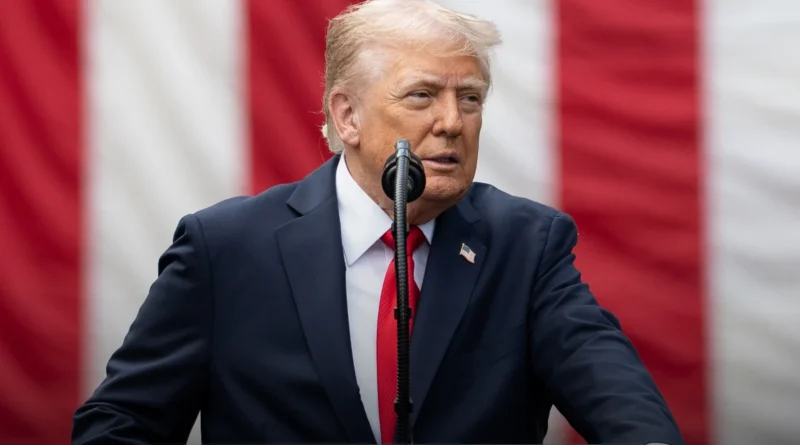
In a move rich with symbolism and global political resonance, US President Donald Trump on Thursday hosted Venezuelan opposition leader and Nobel Peace Prize laureate María Corina Machado at the White House. The meeting, unprecedented in tone and timing, drew international attention after Machado presented Trump with her 2025 Nobel Peace Prize medal—an act that has sparked intense debate across diplomatic and political circles.
The exchange was more than ceremonial. It carried layers of historical reference, political signaling, and strategic calculation at a moment when Venezuela’s future—and Washington’s role in it—appears to be at a critical juncture.
A Symbolic Gesture Rooted in History
Machado, who was awarded the Nobel Peace Prize for her unwavering struggle for democracy and human rights in Venezuela, described the gesture as a tribute to what she called Trump’s “extraordinary commitment” to her country’s freedom. Drawing on the shared revolutionary histories of the United States and Latin America, she invoked a powerful historical parallel.
“Two hundred years ago,” Machado recalled, “General Lafayette presented Simón Bolívar with a medal bearing the face of George Washington. Today, the people of Bolívar return a medal to Washington’s successor in recognition of his commitment to our independence.”
President Trump later confirmed receipt of the gold medal on his social media platform, Truth Social, calling it “a remarkable act of mutual respect.” He praised Machado as a “courageous and exceptional voice” in Venezuela’s long struggle against authoritarianism.
A Meeting Amid Political Upheaval
The meeting took place against the backdrop of dramatic changes in Venezuela’s political landscape. Earlier this month, former president Nicolás Maduro was arrested following a US-led operation—an event that has reshaped power dynamics within the country.
While Machado has long been the most prominent face of Venezuela’s democratic opposition, recent signals from the Trump administration suggest a more pragmatic approach. Trump has indicated a willingness to work with interim President Delcy Rodríguez to ensure stability and safeguard US access to Venezuela’s vast oil reserves.
This dual-track approach—symbolically honoring Machado while engaging Rodríguez—has raised questions about Washington’s true priorities: democracy promotion versus geopolitical and energy interests.
Capitol Hill Engagement and Official Clarifications
Following her White House visit, Machado traveled to Capitol Hill, where she met with a bipartisan group of US senators. Reports suggest she received a warm and supportive reception, reinforcing her standing among lawmakers who remain skeptical of Venezuela’s interim leadership.
Meanwhile, the Nobel Committee issued a clarification, reiterating that while a physical medal may be gifted, the official honor of the Nobel Peace Prize remains permanently with its original recipient. The statement appeared designed to prevent any misinterpretation of the gesture as a transfer of recognition.
Key Questions Emerging From the Visit
The meeting has opened several critical lines of inquiry:
- Policy Direction: Will this act of “medal diplomacy” influence President Trump to withdraw support from Delcy Rodríguez and re-align fully with Machado and the democratic opposition?
- Energy Strategy: How might this evolving relationship impact the reopening of Venezuela’s oil sector to US companies?
- Diplomatic Presence: Could these developments pave the way for the reopening of the Venezuelan embassy in Washington, DC?
Competing Visions for Venezuela’s Future
Democratic Senator Chris Murphy, who met Machado on Capitol Hill, said she warned lawmakers that repression in Venezuela has merely changed form, not disappeared, since Maduro’s fall. According to Murphy, Machado described interim President Rodríguez as a “shrewd operator” whose authority has grown stronger under perceived US backing.
“I hope there will be elections,” Murphy said, “but I remain doubtful.”
President Trump, for his part, has consistently emphasized economic reconstruction and securing US access to Venezuelan oil as core objectives. He has publicly praised Rodríguez—formerly Maduro’s second-in-command—on several occasions.
In an interview with Reuters on Wednesday, Trump remarked, “Dealing with her has been very good.” Rodríguez assumed leadership after Maduro’s arrest and has since positioned herself as a pragmatic reformer.
Contested Elections and Unfinished Transitions
Machado was barred from contesting Venezuela’s 2024 presidential election by a top court dominated by Maduro-era loyalists. Independent observers widely believe that opposition-backed candidate Edmundo González won the election by a significant margin. Nevertheless, Maduro claimed victory and retained power until his arrest.
While the current government has announced the release of dozens of political prisoners in recent weeks, external watchdogs and opposition supporters argue that Caracas has exaggerated the scale of these releases.
In her annual address to lawmakers, Rodríguez called for renewed diplomacy with the United States. Striking a defiant yet conciliatory tone, she said that if she ever needed to travel to Washington, she would do so “walking on her own feet, not being dragged.” She also pledged to propose reforms in Venezuela’s oil industry aimed at expanding access for foreign investors.
Hope, Uncertainty, and a Defining Moment
Machado’s decision to hand over her Nobel medal was not merely an act of personal symbolism—it was a calculated appeal to history, values, and global conscience. Whether it translates into a meaningful shift in US policy remains uncertain.
What is clear, however, is that Venezuela stands at a crossroads. Between democratic aspirations, geopolitical pragmatism, and the enduring pull of oil politics, the Trump–Machado meeting may be remembered as a defining moment—one that revealed both the possibilities and the contradictions shaping Venezuela’s path forward.