
India–EU Defense Reset: From Buyer–Seller to Strategic Co-Creators in a Changing Global Order
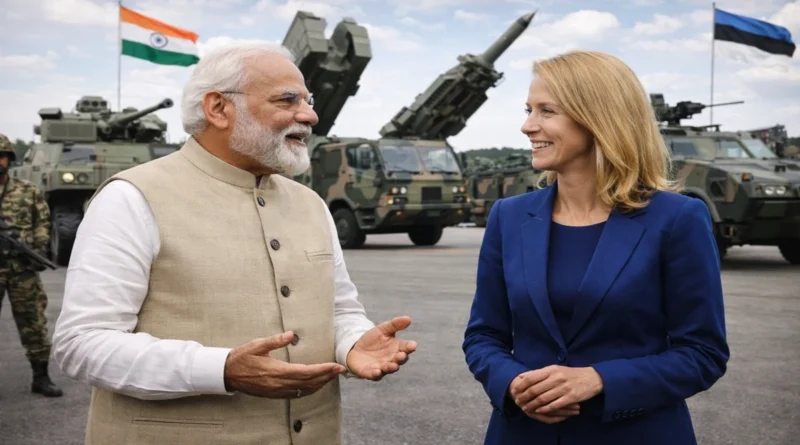
When Prime Minister Narendra Modi showcased India’s indigenously developed weapons, missile systems, artillery, and defense technologies in front of the European Union’s top leadership at the Republic Day parade, it was far more than a ceremonial display. It was a carefully crafted strategic signal. The message was clear: India is no longer just a buyer in the global arms market. It has emerged as a nation that designs, manufactures, and develops advanced defense technology—and one that can be trusted as a long-term security partner.
Against this backdrop, a major development has begun to take shape. The European Union is in the process of resetting its defense policy, and this shift could benefit India more than any other country. At present, India and the EU are preparing for two landmark agreements. The first is the India–EU Free Trade Agreement, often described as the “mother of all deals.” The second, and arguably the most critical component of this broader framework, is a comprehensive security and defense strategic partnership.
Such an opportunity has never presented itself in decades of India–EU relations. For the first time, the European Union is willing to modify its defense strategy with a specific country in mind—and that country is India. Historically, ties between India and the EU were largely confined to trade and political dialogue. India purchased defense equipment from European nations such as France, but these transactions rarely involved technology transfer. There was no joint production, no shared research and development, and no integration between defense industries. The relationship functioned primarily on a buyer–seller model.
That model is now undergoing a fundamental transformation. India and Europe are moving toward becoming joint manufacturers and co-developers of defense technology. This shift is exceptional, because the European Union extends this level of strategic trust to very few partners. No country reshapes its defense doctrine merely out of goodwill; such decisions are driven by national interest.
Europe has increasingly realized that it has become overly dependent on the United States. NATO membership, it now understands, does not guarantee absolute security. The U.S. can step back unexpectedly. Supply chains for weapons, semiconductors, and ammunition remain fragile. The Ukraine war, combined with the unpredictability of American domestic politics, has forced Europe to rethink its strategic assumptions. European leaders have seen that Washington can change course abruptly and, at times, leave its allies exposed.
At the same time, the deepening strategic alignment between China and Russia has emerged as a serious warning signal for Europe. In this changing global landscape, partnering with a self-reliant, technologically capable, and strategically independent India is no longer just an option—it is becoming a necessity.