
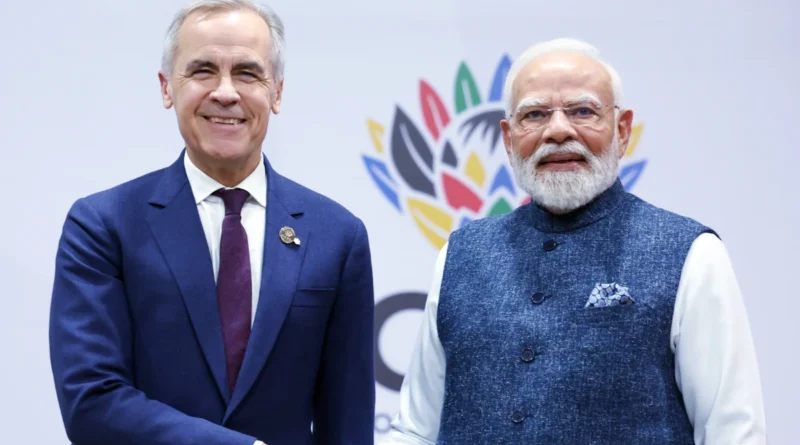
Canada Looks to Reset Ties with India as Prime Minister Mark Carney Plans Key March Visit
Canadian Prime Minister Mark Carney is expected to visit India in the first week of March, a trip that could mark a significant turning point in India–Canada relations. According to India’s High Commissioner to Canada, Dinesh Patnaik, the visit is likely to result in major agreements across strategic sectors such as uranium, energy, critical minerals, and artificial intelligence.
Carney’s broader objective is to reduce Canada’s heavy dependence on the United States by expanding trade partnerships with other major economies. Speaking recently at the World Economic Forum in Davos, he emphasized that the old global order is undergoing rapid change and argued that countries like Canada must work together to help build a stronger, fairer, and more balanced international system.
A Push for Diplomatic Reset
Prime Minister Carney has set an ambitious target of doubling Canada’s exports over the next decade. As part of this strategy, his government has already reached agreements with China to reduce tariffs on electric vehicles and agricultural products. India is now emerging as another key partner in this diversification effort.
Relations between India and Canada had deteriorated during the tenure of former Prime Minister Justin Trudeau following a major diplomatic dispute. Carney is now working to repair that damage and bring the relationship back on track. A sign of this thaw came last year when Prime Minister Narendra Modi attended the G7 Summit at Carney’s invitation. Since then, both countries have quietly resumed trade discussions, setting the stage for deeper engagement.
Focus on a Major Uranium Agreement
One of the most important outcomes of Carney’s proposed March visit could be the formal launch of negotiations on a Comprehensive Economic Partnership Agreement (CEPA) between India and Canada. High Commissioner Patnaik noted that the Canadian Prime Minister is expected to sign multiple agreements during the visit, covering areas such as nuclear energy, oil and gas, environmental cooperation, and education.
The most high-profile deal under discussion is a long-term uranium supply agreement. The proposed deal, estimated to be worth around 2.8 billion Canadian dollars, would involve the supply of uranium to India over a 10-year period, significantly strengthening cooperation in the nuclear energy sector.
Strengthening Energy and Mineral Cooperation
Canada’s Energy Minister, Tim Hodgson, is currently visiting India and has underlined Ottawa’s readiness to deepen cooperation in energy and natural resources. While the exact dates of the Prime Minister’s visit are yet to be finalized, Hodgson confirmed that Canada is fully prepared to supply uranium to India and expand collaboration across the broader energy sector.
He also highlighted India’s rapidly growing economy and its increasing demand for critical minerals—resources that Canada is well-positioned to supply. From clean energy to advanced technologies, both sides see strong complementarities that could translate into long-term strategic and commercial gains.
If Prime Minister Carney’s visit materializes as planned, it could open a new chapter in India–Canada relations—one defined less by past tensions and more by shared economic interests, energy security, and cooperation in emerging technologies.