
India Emerges as a Global Voice in AI Governance at India AI Impact Summit
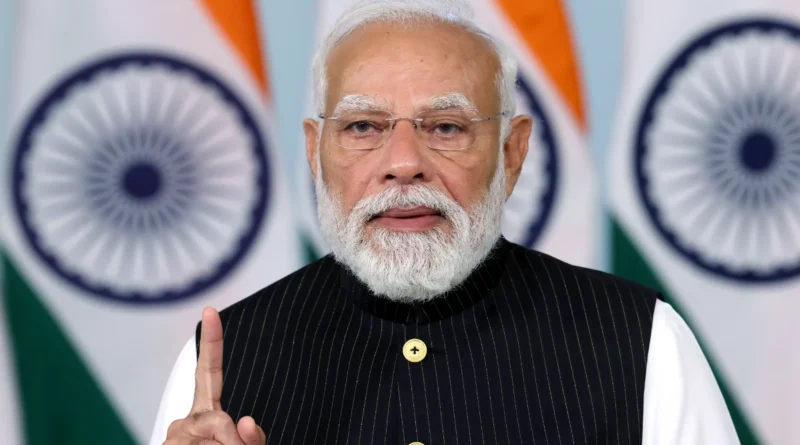
India has stepped confidently onto the world stage as a key architect of the future of artificial intelligence. Celebrating the resounding success of the India AI Impact Summit, Prime Minister Narendra Modi hailed the event as a defining moment that showcased the brilliance and potential of India’s young innovators to the global community.
Held in New Delhi last week, the summit concluded with the adoption of the “New Delhi Declaration on AI Impact,” a landmark framework aimed at strengthening international cooperation in artificial intelligence. More than just a diplomatic milestone, the declaration signals a shared global commitment to harness AI for economic progress and social good.
A Global Applause for India’s Youth-Driven Vision
In a message shared on social platform X, the Prime Minister reflected on the overwhelming appreciation India received during the summit. He emphasized that the world’s recognition of India’s technological capabilities is, in essence, a tribute to the imagination and problem-solving spirit of its young minds. According to him, their approach to technology is not limited to innovation alone—it is guided by a deeper purpose: advancing humanity as a whole.
The summit, themed around the philosophy of “Sarvajan Hitaya, Sarvajan Sukhaya” (for the welfare and happiness of all), positioned India as a nation determined to lead AI development with responsibility and inclusivity at its core.
A Declaration Backed by the World
The New Delhi Declaration was endorsed by 89 countries and international organizations, underscoring an unprecedented level of global consensus. The agreement focuses on channeling artificial intelligence toward sustainable economic growth, inclusive development, and broader societal well-being.
The event drew participation from some of the most influential figures in global governance. Among them were United Nations Secretary-General Antonio Guterres, French President Emmanuel Macron, Brazilian President Luiz Inácio Lula da Silva, and Swiss President Guy Parmelin. Their presence reinforced the summit’s stature as a major international platform shaping AI governance.
Leaders from across continents also joined the dialogue, including Sri Lankan President Anura Kumara Dissanayake, Bhutanese Prime Minister Tshering Tobgay, Mauritian Prime Minister Navinchandra Ramgoolam, Croatian Prime Minister Andrej Plenković, Serbian President Aleksandar Vučić, Seychelles Vice President Sebastian Pillay, Estonian President Alar Karis, and Finnish Prime Minister Petteri Orpo. Senior executives from leading global technology companies were also in attendance, reflecting strong industry engagement alongside political leadership.
Charting an Ethical and Inclusive AI Future
The summit was not merely a showcase of technological capability—it was a call to action. Discussions centered on building AI systems that are ethical, transparent, and aligned with the needs of diverse societies. Participants envisioned a future where artificial intelligence strengthens public services, drives innovation, narrows inequality gaps, and contributes to environmental sustainability.
By convening governments, global institutions, and technology leaders under one roof, India signaled its ambition to move beyond being a consumer of cutting-edge technologies to becoming a rule-shaper in the digital age.
The India AI Impact Summit may well be remembered as a turning point—one where India’s youthful energy, diplomatic outreach, and technological confidence converged to help define the global AI agenda for years to come.