
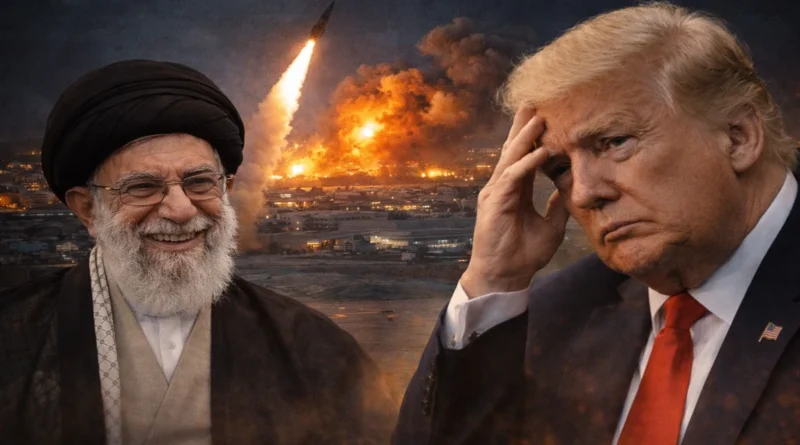
Iran in Turmoil: Economic Collapse Sparks Nationwide Protests and Global Tensions
Iran is currently facing one of the most challenging phases in its recent history. A deepening economic crisis has pushed public anger onto the streets, with protests continuing for a sixth consecutive day across several cities. What began as demonstrations against rising prices and unemployment has now evolved into open resistance against the government and the Islamic ruling system itself.
The unrest has spread from Tehran to cities such as Isfahan, Shiraz, Yazd, and Kermanshah. In some areas, violent clashes have been reported, resulting in multiple casualties. The growing instability has heightened tensions both within the country and beyond its borders.
US Warning and Rising Political Stakes
Amid the unrest, former US President Donald Trump issued a strong warning to Iran. Posting on X, Trump said that if Iran resorts to killing peaceful protesters, the United States is prepared to intervene. He stated that America stands ready and would support demonstrators if the situation escalates.
These remarks have come at a time when speculation around a possible challenge to Supreme Leader Ayatollah Ali Khamenei’s authority has intensified. Iranian intelligence agencies, however, claim that Western nations are using the protests as a cover to undermine and overthrow the Islamic system.
Iran’s Sharp Response to US Remarks
Iran’s reaction to Trump’s statement was swift and aggressive. Officials declared that national security is a “red line” for Iran. Ali Larijani, Secretary of Iran’s Supreme National Security Council, accused the US and Israel of deliberately fueling unrest. He warned that American interference would only worsen instability and said Washington should be more concerned about the safety of its own troops.
Iran’s parliamentary speaker went a step further, cautioning that any aggressive move by the US would make American military bases and forces in the region legitimate targets. This warning directly followed Trump’s comments about potential intervention.
Why Are Iranians Protesting?
At the heart of the protests lies severe economic distress. Inflation in Iran has crossed 42 percent. Food and essential commodities have become nearly 72 percent more expensive compared to last year, while healthcare and medicine costs have risen by around 50 percent.
The Iranian currency has also suffered a dramatic collapse. The value of one US dollar has surged to nearly 1.4 million rials, up from about 820,000 rials a year ago. While incomes have remained largely unchanged, daily expenses have multiplied. Many shopkeepers have stopped selling goods altogether, fearing heavy losses.
Government’s Stand on the Protests
Iran’s civilian government, led by President Masoud Pezeshkian, has signaled a willingness to engage in dialogue with protesters. Speaking on state television, Pezeshkian admitted the seriousness of the crisis, saying that from an Islamic perspective, failing to address people’s livelihood issues would be morally unacceptable.
However, he also acknowledged the government’s limited options, citing the sharp fall of the rial and the overwhelming pressure on the economy. With financial constraints tightening and public frustration growing, Iran now stands at a critical crossroads.