
Rising Storm in South Asia: U.S. Think Tank Warns of Pakistan’s Turbulent Road Ahead in 2026
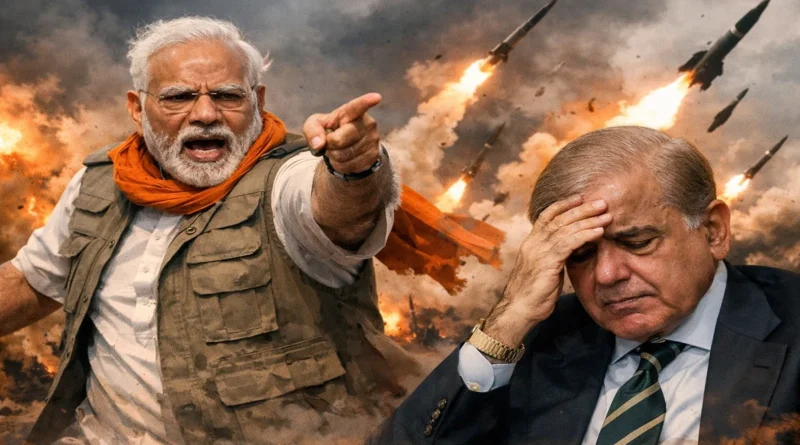
Pakistan’s geographical and political stability is facing serious questions. A new assessment has emerged that has reportedly unsettled Pakistan’s leadership and left millions of its citizens anxious about the future. According to this outlook, the coming year could prove extremely challenging for Pakistan—so much so that 2026 is being described as a potential turning point that may redefine the country’s position on the global stage.
What makes this warning significant is its source. A prominent American think tank, the Council on Foreign Relations (CFR), has released a report that has drawn global attention. The report suggests that Pakistan could find itself entangled in major conflicts—not just with India, but also with Afghanistan—within the next year.
Why 2026 Could Be Critical
In its report “Conflicts to Watch in 2026,” CFR has cautioned that tensions between India and Pakistan could once again escalate into war. One of the main triggers identified is a possible rise in militant activity in Kashmir. While the report notes that such a conflict could affect U.S. strategic interests, it does not go into detail about the exact nature of that impact.
Alongside this, CFR has highlighted another risk point: growing hostility between Pakistan and Afghanistan. According to the assessment, there is a “moderate likelihood” of armed conflict between the two neighbors in 2026, driven largely by cross-border militant attacks and unresolved border tensions. However, the report adds that such a conflict would likely have limited consequences for U.S. interests.
Background of Recent Tensions
Earlier this year, India and Pakistan were involved in a brief but intense four-day military confrontation marked by drone and missile strikes from both sides. The escalation followed an attack in Pahalgam, where 22 civilians were killed by militants allegedly backed by Pakistan. In response, India launched Operation Sindoor, targeting militant infrastructure in Pakistan and Pakistan-administered Kashmir.
Although a ceasefire was eventually announced, hostile rhetoric continued from Pakistan’s leadership. Intelligence reports later suggested that despite the ceasefire, militant activity remained a concern, particularly in Jammu, where dozens of fighters were believed to be active during the winter months.
Military Preparations on Both Sides
Even after the ceasefire, both countries have accelerated their defense preparations. India has approved major defense acquisitions, including drones, air-to-air missiles, and precision-guided munitions. Pakistan, on the other hand, has reportedly entered discussions with Turkey and China to upgrade its drone capabilities and air defense systems, aiming to address weaknesses exposed during the recent clashes.
Pakistan–Afghanistan Flashpoint
The CFR report also draws attention to escalating violence along the 2,600-kilometer Durand Line, the disputed border between Pakistan and Afghanistan. In recent months, deadly exchanges of fire have taken place at multiple locations along the border. Afghanistan has accused Pakistan of conducting airstrikes near Kabul, while Pakistan claims the Taliban government has sheltered militants responsible for attacks on its territory.
In one of the most intense episodes in recent years, both sides claimed to have seized and destroyed each other’s border posts, underscoring how volatile the situation has become.
A Region on Edge
Taken together, these developments paint a picture of a region heading toward heightened instability. While no outcome is certain, the CFR report makes one thing clear: 2026 could be a decisive year for Pakistan, with the risk of multiple conflicts testing its political, military, and economic resilience.