
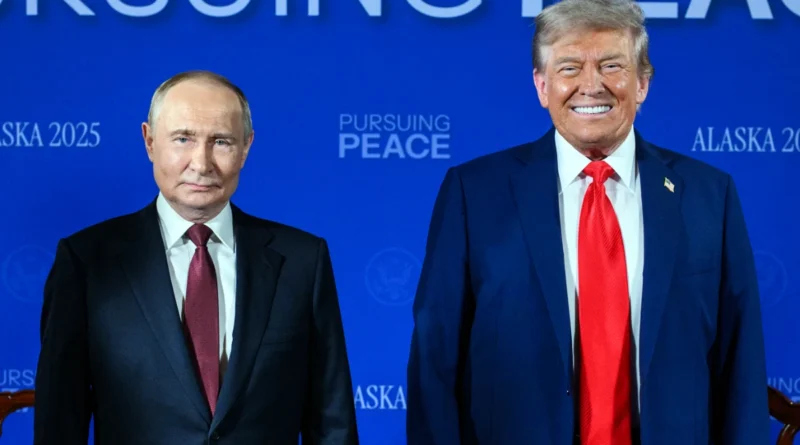
Russia Weighs Cautious Entry Into Trump’s Proposed “Board of Peace” for Gaza
Russia has clarified its position on joining the proposed “Board of Peace,” an international body suggested by former U.S. President Donald Trump to oversee governance and reconstruction in Gaza after the war. While the initiative has been publicly portrayed by Trump as already having Moscow’s backing, Russian President Vladimir Putin has taken a far more measured and conditional stance.
Putin has emphasized that Russia has not yet made a final commitment. According to him, the proposal is currently under close review, and any decision will be taken only after consultations with Russia’s strategic partners and a detailed examination of the documents received from the United States.
Putin Responds to Trump’s Davos Claim
Putin’s remarks came shortly after Trump announced at the World Economic Forum in Davos that Russia had already agreed to participate in the Board of Peace. The Russian president stopped short of confirming this claim, instead signaling that Moscow is still evaluating both the structure and the mandate of the proposed body.
At the same time, Putin introduced a controversial financial condition tied to Russia’s potential participation. He stated that if Russia were to be granted permanent membership on the board, it would be prepared to contribute USD 1 billion—but only if that money is drawn from Russian assets currently frozen by the United States following the Ukraine conflict.
Proposal to Use Frozen Russian Assets
Putin explained that the suggested contribution would not come from fresh state funds, but from Russian financial assets that were frozen during the previous U.S. administration. He framed this as a practical and symbolic step, arguing that those funds could be redirected toward stabilizing Gaza and supporting peace-related efforts.
Speaking during a televised address at a National Security Council meeting, Putin said the Russian Foreign Ministry has been instructed to thoroughly analyze the proposal and engage in discussions with key partners. Only after that process, he said, would Russia formally respond to the invitation.
Putin also reiterated Russia’s long-standing position in favor of international stability and conflict resolution, acknowledging what he described as constructive efforts by the current U.S. administration toward resolving the Ukraine crisis. He added that any initiative related to Gaza must respect the core needs and aspirations of the Palestinian people and align with existing United Nations resolutions on the Israeli-Palestinian conflict.
From Gaza Oversight to a Broader Global Role
Initially, the Board of Peace was envisioned as a small group of global leaders tasked specifically with overseeing post-war governance in Gaza. However, the concept has since evolved into a far more ambitious project. According to its current outline, the board could take on a wider role in mediating international conflicts, prompting some observers to compare its potential influence to that of the UN Security Council.
Trump, speaking to reporters after meeting NATO Secretary General Mark Rutte at Davos, claimed confidently that Putin had accepted the invitation, saying, “He was invited. He accepted.” Moscow’s more cautious messaging, however, suggests that the situation is still fluid.
Growing List of Supporters—and Some Hesitation
The White House has stated that around 50 invitations have been issued so far, with at least 35 world leaders expressing willingness to participate. Countries from the Middle East—such as Israel, Saudi Arabia, the United Arab Emirates, Bahrain, Jordan, Qatar, and Egypt—are among those that have agreed to join.
Several NATO members and partners have also confirmed participation, including Turkey and Hungary, alongside countries such as Morocco, Pakistan, Indonesia, Kosovo, Uzbekistan, Kazakhstan, Paraguay, and Vietnam. Armenia, Azerbaijan, and Belarus have likewise accepted their invitations.
India, meanwhile, has received an invitation from the U.S. president but has not yet announced a final decision on whether it will join the initiative.
What Is the “Board of Peace”?
Proposed by Donald Trump, the Board of Peace is designed to function as an international governing and oversight body for Gaza in the post-conflict period. Its key features include:
- Invitation-based membership: Countries join by receiving and accepting formal invitations.
- Permanent seats: Nations contributing USD 1 billion are eligible for permanent membership.
- Core objectives: Demilitarization of Gaza, delivery of humanitarian aid, and reconstruction of critical infrastructure.
Global Reactions and Political Challenges
Putin’s conditional openness to the board has been viewed by some as a diplomatic win for Trump. However, the proposal to use frozen Russian assets has created legal and political complications in Washington. In Europe, countries such as Poland and others have expressed unease about Russia—and Putin personally—playing a prominent role in the new body.
As discussions continue, the future of the Board of Peace remains uncertain, shaped by competing geopolitical interests, legal hurdles, and differing interpretations of what true post-war governance and peace-building should look like.