
Shock Diplomacy and Rising Tensions: UAE–India Meeting Followed by Reports of Escalating US Military Pressure on Iran
At a time when relations between the United States and the European Union remain strained and instability continues to grip the Middle East, the global diplomatic community was caught off guard by an unexpected development: UAE President Sheikh Mohammed bin Zayed Al Nahyan’s sudden visit to New Delhi to meet Prime Minister Narendra Modi. The unannounced nature and timing of the visit triggered intense speculation, sending ripples from Washington to Islamabad.
The surprise meeting took place amid growing friction within the Gulf region, particularly between key players such as the UAE and Saudi Arabia, while regional dynamics involving Iran were also undergoing rapid change. Against this backdrop, President Al Nahyan’s arrival in Delhi was widely interpreted as a strategic signal rather than a routine diplomatic engagement.
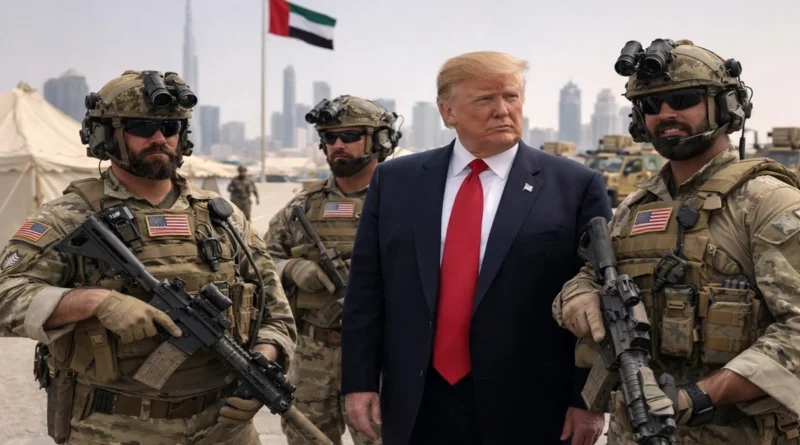
Now, just three days after that visit, reports emerging from the UAE have further heightened global anxiety. According to these reports, the United States has significantly stepped up its military preparedness against Iran. It is claimed that under President Donald Trump’s direction, elite US Delta Force units have been deployed to the UAE, with additional forces positioned in Jordan and Qatar—suggesting a coordinated effort to tighten strategic pressure on Tehran from multiple fronts.
These developments have fueled speculation that Washington is preparing for a decisive move against Iran. Reports indicate that as many as 25,000 US troops have been mobilized across the Middle East, with American military bases in the region placed on heightened alert. Observers note that this level of readiness challenges earlier assumptions that a direct US confrontation with Iran had been deferred or ruled out.
Comparisons are now being drawn to past US interventions, including operations where American forces allegedly facilitated regime change through targeted actions. Some analysts are questioning whether a similar approach could be attempted in Iran, although no official confirmation has been issued to support such claims.
Meanwhile, Iran itself continues to grapple with severe internal unrest. For the first time, Iranian state television has released official figures on the death toll from recent protests and the ensuing violence. According to the announcement, 3,117 people have died since demonstrations erupted on December 28. The statement, attributed to the Martyrs Foundation, said that the deceased included 2,427 civilians and members of the security forces, though it did not provide a detailed breakdown of the remaining fatalities.
Human rights organizations, however, have presented significantly higher estimates. A US-based rights group has claimed that as many as 4,560 people may have been killed during the unrest. Independent verification of these figures has proven difficult, with international news agencies, including the Associated Press, stating that they are unable to independently confirm the exact number of casualties.
Taken together, the sudden diplomatic movements, reports of large-scale US military deployments, and Iran’s internal crisis point to a region once again on edge—where quiet meetings and unverified reports are feeding fears of a major geopolitical escalation.