
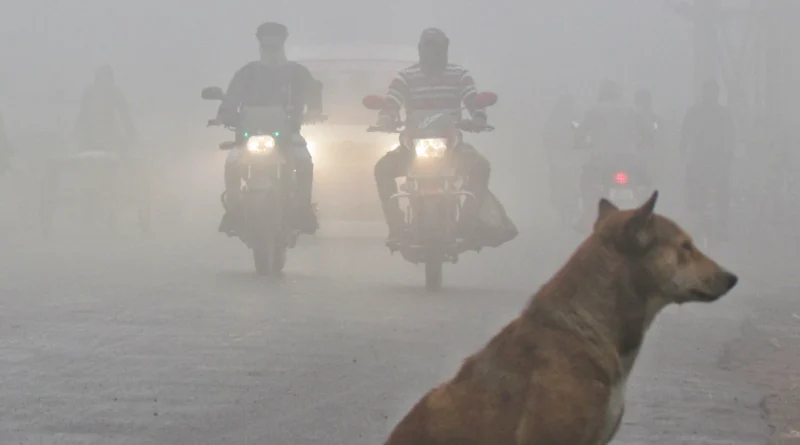
Dense Fog, Bitter Cold and Toxic Air Bring Delhi-NCR to a Standstill
Saturday morning began on a harsh note for Delhi-NCR as a dangerous combination of thick fog, intense cold and hazardous air quality blanketed the region. Visibility dropped sharply, disrupting flights, trains and road traffic, while pollution levels climbed further, deepening the capital’s winter woes.
Travel Disruptions and Poor Visibility
In the early hours, visibility across many areas fell to between zero and 50 metres.
- Air and Rail Services: Dense fog at Palam and Safdarjung airports led to delays in several domestic and international flights. Rail services were also badly hit, with dozens of trains running hours behind schedule.
- Road Traffic: Driving conditions turned risky as vehicles crawled along roads. Motorists were forced to use headlights and fog lamps even during daytime.
Air Quality Slips into the ‘Severe’ Zone
Calm wind conditions and plunging temperatures trapped pollutants close to the ground, worsening air quality. Fog mixing with smoke created a thick layer of smog across the region.
In most parts of Delhi, the Air Quality Index (AQI) crossed the 450 mark, placing it firmly in the “severe” category. Doctors advised elderly people and those with respiratory problems to remain indoors as a precaution.
Fog Blankets North India
A dense fog cover spread across large parts of north India, significantly reducing visibility in several states. Punjab, Haryana and Uttar Pradesh witnessed dense to very dense fog. In Uttar Pradesh, cities such as Saharanpur, Ghaziabad, Bareilly, Gorakhpur and Kanpur recorded near-zero visibility, while Lucknow, Varanasi and Prayagraj reported visibility between 50 and 100 metres until around 6:30 am.
Delhi-NCR Under Emergency Pollution Measures
In the national capital, fog combined with toxic smog, pushing air quality to alarming levels and prompting authorities to reimpose Stage III of the Graded Response Action Plan (GRAP) across Delhi-NCR.
According to the Central Pollution Control Board, Delhi’s overall AQI stood at 368 at 7 am, categorised as “very poor.” Several monitoring stations reported AQI readings well above 400, entering the “severe” range.
- Worst-hit areas: Anand Vihar (442), Patparganj (433), Chandni Chowk (427), Nehru Nagar (423), Vivek Vihar (420) and Jahangirpuri (416).
- Other affected zones: Dwarka, ITO, Sonia Vihar and Wazirpur remained in the “very poor” category, while the IGI Airport area recorded an AQI of 304.
Neighbouring NCR cities also reported worrying pollution levels, with Gurugram at 345, Noida at 385, Ghaziabad at 380 and Faridabad at 253.
Weather Outlook
Operations at Indira Gandhi International Airport continued to face delays due to low visibility. Road and rail travel remained slow across several pockets as commuters navigated near-whiteout conditions.
The India Meteorological Department has forecast dry weather in Delhi for the next seven days, with skies ranging from clear to partly cloudy and no rainfall expected. Nights and early mornings will remain cold, and fog or haze may persist on some days, though visibility is likely to improve as temperatures rise.
Daytime temperatures are expected to hover between 20°C and 25°C, with a gradual warming trend after January 16. Night temperatures, however, will stay low during the first half of the week, before slowly rising to around 8–10°C from January 18, offering some relief from the biting cold.