
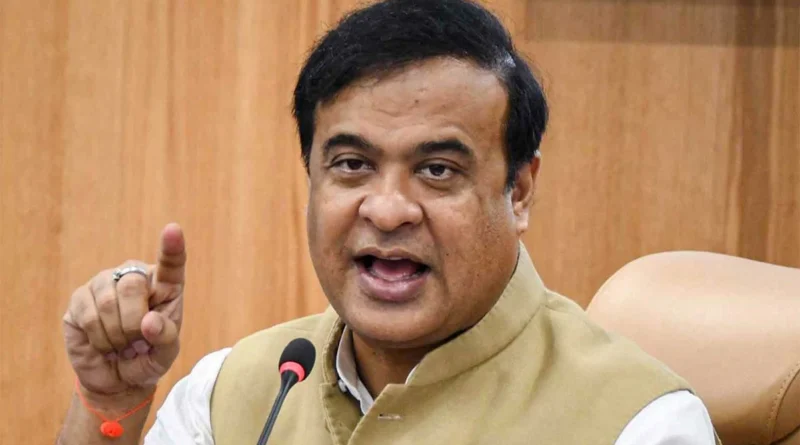
Controversy Erupts in Assam Over CM Sarma’s Remarks on Voter List Revision and ‘Miya’ Community
Assam Chief Minister Himanta Biswa Sarma has sparked a major political storm with a series of strongly worded and highly controversial remarks linked to the ongoing Special Intensive Revision (SIR) of the state’s electoral rolls. According to media reports, the Chief Minister claimed that between four to five lakh voters belonging to the Bengali-speaking Muslim community—derogatorily referred to as “Miya”—would be removed from the voter list during this exercise.
Speaking to journalists at a government event in Digboi, Tinsukia district, Sarma reportedly stated that he and his party, the Bharatiya Janata Party (BJP), stand firmly against the Miya community. He went as far as saying that it was his responsibility to “create difficulties” for them so that they feel compelled to leave Assam. He further remarked that members of this community should vote in Bangladesh, not in Assam, reinforcing his claim that they are outsiders.
According to reports, the Chief Minister described the current revision process as just the beginning, asserting that once the Special Intensive Revision is fully implemented, the deletion of four to five lakh Miya voters would be inevitable. Dismissing criticism from opposition parties, he said that no matter how strongly the Congress or others attack him, his mission would remain focused on putting pressure on the Miya community. He also openly acknowledged that complaints being filed against members of this community were being done on his instructions.
Sarma allegedly urged party workers to ensure that Form 7—used for objections to voter names—is filed wherever possible, forcing individuals from the targeted community to repeatedly visit government offices. He said this would serve as a reminder that “indigenous people of Assam are still present.” He even encouraged the general public to trouble the Miya community in everyday interactions, however minor, arguing that if they are not pressured, they will continue to spread into other parts of the state. One example he cited, according to reports, was to deliberately underpay a Miya rickshaw puller as a form of resistance.
Defending his position, the Chief Minister framed the issue as one of electoral integrity. He argued that “vote theft” occurs when illegal immigrants manage to get their names included in electoral rolls. While asserting that the Congress could criticize him endlessly, he said his campaign against alleged infiltrators would continue, describing it as a fight for Assam’s very survival. After his remarks triggered widespread outrage, Sarma clarified that he was not attempting to fuel Hindu–Muslim tensions, but was instead speaking in favor of Assamese interests and against what he described as Bangladeshi infiltration.
Opposition Pushback and Electoral Concerns
The opposition responded sharply to the Chief Minister’s statements. Raijor Dal president and MLA Akhil Gogoi said that the people of Assam did not elect the Chief Minister to systematically harass or intimidate a particular community. Congress leader Aman Wadud accused Sarma of effectively sidelining the Constitution and undermining democratic norms in the state.
Data released by the Election Commission adds further context to the controversy. As per the draft electoral roll published on December 27, Assam currently has approximately 25.1 million registered voters, after removing names of deceased individuals, those who have migrated, and duplicate entries. Officials claim that verification has been conducted across more than six million households. However, on January 25, six opposition parties, including the Congress, submitted a memorandum to the Chief Electoral Officer, alleging that the revision process is arbitrary, illegal, and unconstitutional, and that genuine voters are being selectively targeted.
Political Strategy Ahead of Assembly Elections
Viewed more broadly, these developments point to an intensifying political narrative in Assam centered on safeguarding indigenous rights and mobilizing public sentiment against outsiders and alleged infiltrators. With the next assembly elections approaching, Sarma’s statements are widely seen as politically significant. By repeatedly portraying the Miya community as foreign, illegal, and fraudulent voters, the ruling party appears to be shaping an electoral strategy that consolidates support while pushing the opposition into a defensive corner.
Critics argue that this approach sidelines pressing issues such as unemployment, rising prices, and development, shifting the focus instead to identity politics. Meanwhile, the BJP is clearly stepping up its election preparedness. Union Home Minister Amit Shah is currently on a two-day visit to Assam, holding meetings from Dibrugarh to Guwahati aimed at strengthening the party’s campaign machinery for the upcoming polls.
The BJP leadership is expected to finalize seat-sharing arrangements with NDA allies such as the Asom Gana Parishad (AGP), the United People’s Party Liberal (UPPL), and the Bodoland People’s Front (BPF), while also resolving internal differences within the coalition. Past election results suggest that coordination among NDA partners played a crucial role in their success.
With Himanta Biswa Sarma projected as the face of the campaign, and with the party banking on Prime Minister Narendra Modi’s leadership and its development narrative, the BJP is not merely aiming for a return to power. Its stated ambition is to secure over 100 seats and establish an unprecedented hat-trick of political dominance in Assam.