
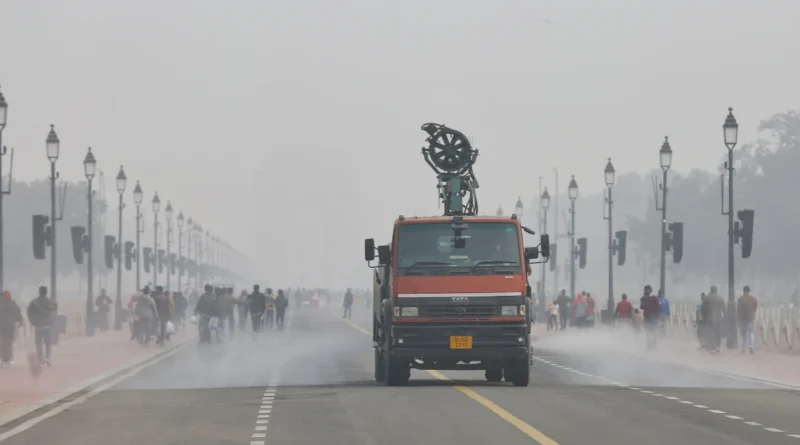
Dense Fog Disrupts Flights as Delhi–NCR Rings in New Year Under Toxic Air
Dense fog blanketed Delhi and the National Capital Region (NCR) early Wednesday morning, disrupting flight schedules and plunging the capital into hazardous air conditions just hours before the New Year. Operations at Indira Gandhi International Airport continued under Category-III conditions, which allow aircraft to land in extremely low or near-zero visibility. Despite this, airlines warned that delays and disruptions were likely to intensify through the morning.
The India Meteorological Department (IMD) maintained a red alert, cautioning that dense fog could persist throughout the day. It also forecast generally cloudy conditions with light rain on New Year’s Day, offering little immediate relief from pollution levels.
Airlines Issue Advisories
Airlines issued advisories urging passengers to check flight statuses before leaving for the airport. IndiGo said fog across Delhi and northern India could affect both departures and arrivals as the day progresses, advising travelers to allow extra time for road journeys. Air India warned of continued delays and said it had proactively cancelled some fog-affected morning flights to prevent passengers from facing long waits at the airport.
Air Quality Remains ‘Very Poor’
While travel was disrupted, air quality showed no improvement. Delhi’s overall Air Quality Index (AQI) stood at 383 (‘very poor’) at 7 am, with several hotspots slipping into the ‘severe’ category. Anand Vihar recorded an AQI of 483, ITO and Rohini 426, Chandni Chowk 419, and RK Puram 411.
Neighbouring cities also struggled with polluted air. Gurugram recorded an AQI of 348, Ghaziabad 378, and Noida 391. Faridabad fared slightly better at 276, though it still fell in the ‘poor’ category.
Pollution to Persist Into the New Year
According to the Air Quality Early Warning System, pollution levels are likely to remain ‘severe’ on December 31 and January 1, easing marginally to ‘very poor’ on January 2. Air quality is expected to stay very poor for at least six days.
Officials attributed the worsening situation to weak winds and poor ventilation—conditions that trap pollutants close to the ground. Temperatures are expected to hover around normal levels over the next 24 hours, rise by 2–3°C over the following two days, and then drop again, ensuring that Delhi–NCR enters the New Year under a blanket of cold, polluted haze.