
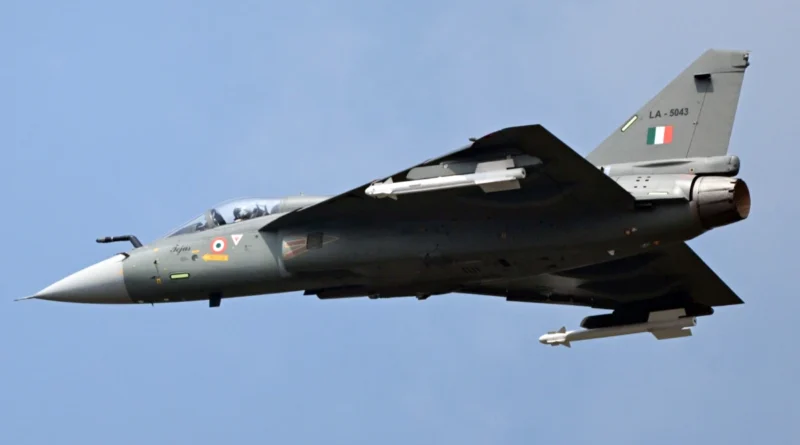
IAF Grounds Entire Tejas Fleet After Fresh Crash Raises Safety Concerns
The Indian Air Force (IAF) has temporarily suspended operations of its single-seat Tejas fighter jets following another crash involving the indigenously developed Light Combat Aircraft (LCA). The incident, which occurred earlier this month, has prompted an extensive technical review across the fleet and reignited debate over the program’s reliability at a critical time for India’s defense modernization plans.
Approximately 30 single-seat Tejas aircraft have been grounded as a precautionary measure while engineers and investigators conduct a comprehensive probe.
Crash During Routine Training Sortie
According to sources familiar with the matter, the accident took place at a key airbase when the aircraft was landing after a routine training sortie. Preliminary findings suggest the possibility of a technical malfunction, potentially linked to an onboard system failure.
The jet reportedly sustained severe airframe damage and may be declared a total loss. However, the pilot managed to eject safely and escaped without serious injury — a detail that has offered some relief amid growing concern within defense circles.
This marks the third Tejas aircraft lost since the fighter was inducted into operational service with the IAF.
A Pattern of Recent Incidents
The first major crash occurred in March 2024 near Jaisalmer, when a Tejas jet went down while returning from a firepower demonstration. The pilot in that incident also ejected safely.
A second accident followed in November 2025 during an aerobatic display at the Dubai Airshow, resulting in the tragic death of the pilot. The investigation into that crash is still ongoing.
The latest mishap has added urgency to ongoing safety assessments and technical evaluations of the platform.
Pressure Mounts on the Tejas Mk1A Program
The crash comes at a sensitive moment for the Tejas Mk1A program. The IAF has placed orders for 180 upgraded Mk1A variants, intended to strengthen India’s fighter squadron numbers and reduce reliance on foreign platforms. However, deliveries are already running nearly two years behind schedule.
Repeated accidents combined with production delays have cast a shadow over India’s indigenous defense manufacturing ambitions. The Tejas project has long been promoted as a symbol of self-reliance in military technology, and setbacks carry both operational and reputational consequences.
As of now, the IAF has not issued an official public statement detailing the cause of the most recent crash. For the moment, the focus remains on safety inspections and restoring confidence in a fighter jet that represents a cornerstone of India’s air power strategy.