
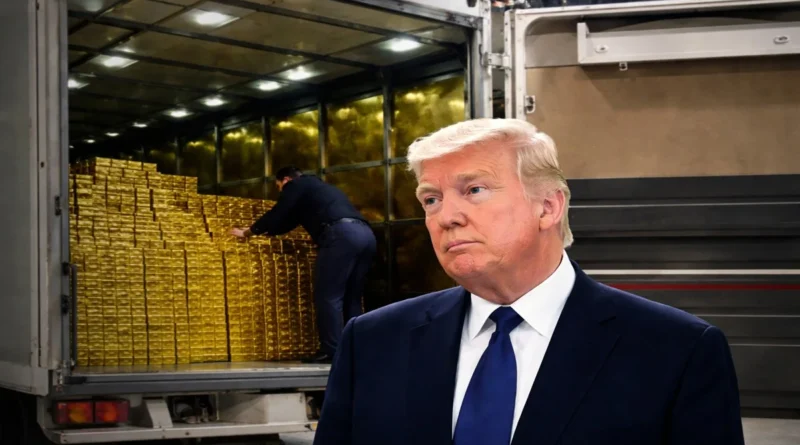
Global Gold Shift: 30 Nations Repatriate Reserves from the United States
Germany, which holds the world’s second-largest gold reserves, has around 1,236 tons of its gold stored in the United States. Similarly, Italy has about 1,060 tons, while countries such as the Netherlands, France, and several others also keep a significant portion of their gold reserves in American vaults. Now, these nations are gradually preparing to repatriate their gold back to their own countries.
Global Uncertainty Triggers Race to Repatriate Gold Reserves
Amid shifting global politics and rising geopolitical tensions, a new trend is emerging: countries seeking to bring their gold reserves back home. Since the return of Donald Trump to the US political spotlight, several European nations appear to be reassessing their trust in the United States, and this shift is now being reflected in their decisions regarding gold reserves.
The United States holds the world’s largest gold reserves, totaling around 8,133 tons. However, a significant portion of the gold stored in American vaults does not belong to the US alone. More than 30 countries keep part of their gold reserves in the United States, where it has been safeguarded for decades. Recently, however, questions have begun to arise over this long-standing arrangement.
Germany, the country with the second-largest gold reserves in the world, has approximately 1,236 tons of its gold stored in the United States. Similarly, Italy has around 1,060 tons, while nations such as the Netherlands, France, and several others also hold substantial portions of their gold reserves in American vaults. Many of these countries are now gradually considering plans to repatriate their gold back to their own territories.
This practice dates back to the 1950s, when trade between Europe and the United States expanded significantly. At that time, the US was widely regarded as the most secure location for storing gold, and New York had emerged as a global financial hub, making gold transactions easier and more efficient.
India is no exception to this trend. Out of India’s total gold reserves of over 880 tons, around 290 tons are stored abroad, although some portion has recently been brought back to the country.
Storing gold overseas has traditionally offered several advantages, including enhanced security, easier international trade, and reduced risk during crises. However, the global environment now appears to be changing. Policies associated with the “America First” agenda, along with rising international tensions, have created noticeable strains in relations between the United States and several European countries.
Amid the Iran conflict and rising global inflation, gold is increasingly being viewed as a safe-haven asset. As a result, many countries are now seeking to maintain greater control over their strategic reserves by bringing them back within their own borders.
In essence, this movement is not merely about the repatriation of gold, but also reflects shifting global trust and the evolving balance of economic and geopolitical power.