
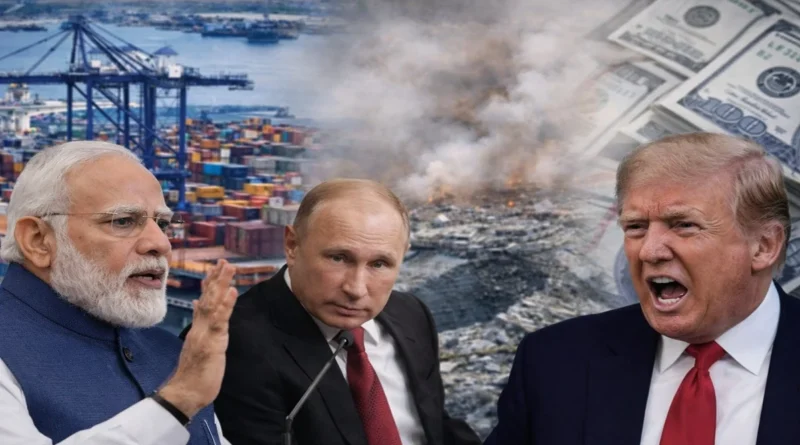
India Hits Back at Trump as Iran–America War Escalates, Dollar Faces Major Setback
Between October 2024 and October 2025, several developed countries significantly increased their investments in U.S. government bonds and the U.S. dollar. Nations such as Japan, Germany, France, and United Kingdom have been steadily channeling capital into American debt instruments. In contrast, major BRICS economies including India, China, and Brazil have been moving away from U.S. bonds. Over the past year, these three countries collectively reduced their investments in U.S. Treasury bonds by about $183 billion. Analysts say this shift is taking place amid growing geopolitical tensions, including the ongoing America–Iran War, which has raised concerns about global financial stability and the future role of the U.S. dollar in international markets.
When policies are strong, intentions are clear, and leadership is determined, no global power can easily overpower a nation. India has demonstrated this on several occasions in the past. Whenever any country has tried to harm India’s interests, New Delhi has responded firmly, leaving a mark in history. A similar situation appears to have unfolded in India’s economic dealings with the United States during the presidency of Donald Trump.
Trump had imposed heavy tariffs on Indian goods, believing that India would eventually bow to pressure and distance itself from Russia. However, the situation evolved differently. Instead of yielding, India responded with strategic economic moves that analysts say could have had a far greater impact than the tariffs themselves. Without engaging in any military confrontation, India managed to counter the pressure and protect its economic interests.
According to economic data, developed economies generally consider investments in U.S. government bonds and the U.S. dollar as safe assets. Between October 2024 and October 2025, countries such as Japan, Germany, France, and the United Kingdom continued investing heavily in American bonds. In contrast, major BRICS economies — including India, China, and Brazil — have gradually reduced their exposure to U.S. debt.
Over the past year, these three countries collectively cut their investments in U.S. Treasury bonds by around $183 billion. India alone reduced its holdings significantly. By October 2025, India held about $190.7 billion worth of U.S. bonds, compared to $241.4 billion in October 2024, marking a sharp decline of nearly 40 percent.
At the same time, the U.S. dollar’s share in global foreign exchange reserves has been declining. Over the past five years, the dollar’s share has dropped by about 18 percent, indicating a gradual shift in the global financial system. Data also shows that India’s investments in U.S. Treasuries have fallen by nearly 21 percent within just one year. Analysts estimate that such shifts could have impacted the American financial system by roughly ₹4.5 lakh crore.
Experts say this trend reflects a strategic shift in India’s foreign exchange reserve management. Amid changing global economic and geopolitical dynamics — including tensions like the America–Iran War — India has been focusing on strengthening its financial resilience. The government aims to reduce excessive dependence on the U.S. dollar while building a more diversified and balanced reserve system.
This strategy is not limited to India alone. Other BRICS nations are also gradually attempting to reduce their dependence on the dollar in order to protect their economies from global fluctuations. Such developments have become an important part of International News in Hindi, as they highlight the shifting balance of economic power in the world and the growing effort among emerging economies to reshape the global financial order.