
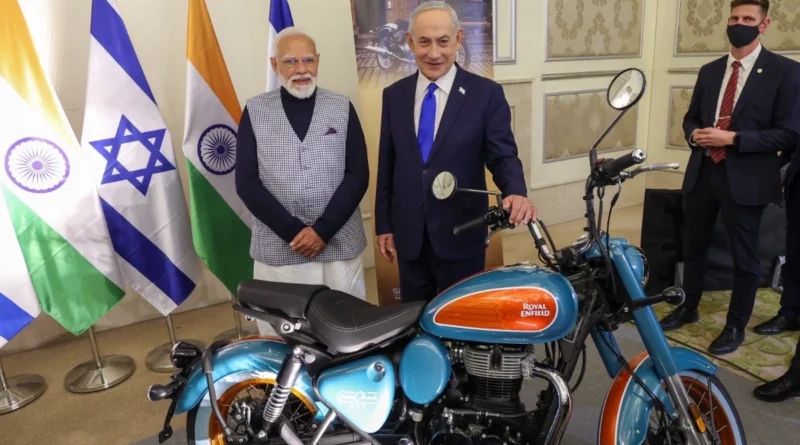
Modi in Israel: A Diplomatic Overture Framed by Security, Solidarity, and Strategic Vision
Indian Prime Minister Narendra Modi arrived in Israel for a two-day visit that quickly evolved into a defining moment in the trajectory of India–Israel relations. At the heart of the visit was his address to the Knesset, Israel’s parliament, where symbolism met strategy and rhetoric underscored resolve.
Honored at the Knesset
In recognition of his role in strengthening the strategic partnership between the two nations, Prime Minister Modi was conferred the prestigious “Speaker of the Knesset Medal.” The honor highlighted what Israeli leaders described as his exceptional contribution to deepening bilateral ties across defense, innovation, and diplomacy.
Speaking before Israeli lawmakers, Modi struck a tone that blended moral clarity with geopolitical pragmatism. Referring to the Gaza peace initiative, he characterized it as a pathway toward a just and enduring peace for the wider region. At the same time, he delivered an unequivocal message of solidarity with Israel, asserting that terrorism—regardless of where it occurs—poses a universal threat to peace and stability.
Drawing parallels between the two democracies, Modi emphasized that India, like Israel, follows a firm and consistent zero-tolerance policy toward terrorism. “There are no double standards,” he declared, reinforcing India’s long-standing position that security cannot be selective or compromised.
A Solemn Tribute at Yad Vashem
The second day of the Prime Minister’s visit begins on a reflective note with a visit to Yad Vashem, Israel’s official Holocaust memorial in Jerusalem. Established in 1953, the memorial stands in remembrance of the six million Jews who perished during the Holocaust. The visit underscores the shared commitment of both nations to preserving historical memory and combating hatred in all its forms.
Following the tribute, Modi is scheduled to hold bilateral talks with Israeli President Isaac Herzog, where discussions are expected to center on expanding diplomatic, technological, and economic cooperation.
High-Level Talks with Netanyahu
Later in the afternoon, Prime Minister Modi will meet his Israeli counterpart, Benjamin Netanyahu, for delegation-level discussions. The meeting, slated for around 2:40 PM local time, will be followed by the signing of key agreements and a joint press statement outlining the outcomes of the talks.
Defense and security cooperation are expected to dominate the agenda. Reports suggest potential collaboration between India’s indigenous air defense platform, Sudarshan Chakra, and Israel’s globally recognized Iron Dome missile defense system. Such cooperation would signal a new chapter in joint technological innovation and defense preparedness.
Beyond security, economic engagement is also high on the agenda. Bilateral investment frameworks and ongoing negotiations toward a Free Trade Agreement are likely to receive renewed momentum. Innovation, trade expansion, and cross-border investment are being positioned as pillars of the next phase of India–Israel partnership.
Connecting with the Indian Diaspora
Before concluding his visit, Prime Minister Modi will interact with members of the Indian community residing in Israel—a gesture that has become a hallmark of his overseas engagements. Shortly thereafter, he is scheduled to depart for New Delhi in the early evening.
As the visit unfolds, it is clear that the diplomatic choreography extends well beyond ceremonial gestures. With security cooperation deepening, economic ambitions expanding, and political solidarity reaffirmed, Modi’s Israel visit appears poised to further anchor a partnership increasingly defined by strategic trust and shared democratic values.