
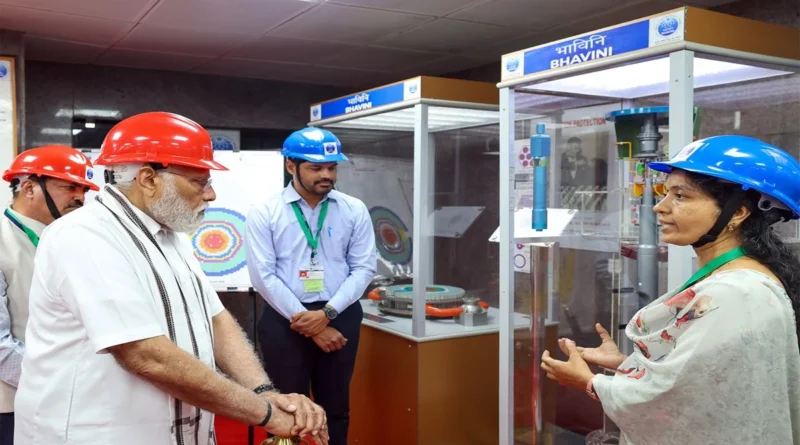
Narendra Modi Makes Historic Nuclear Move Near the US
India’s Prototype Fast Breeder Reactor (PFBR) has successfully achieved criticality, meaning the reactor can now sustain a nuclear chain reaction on its own without any external support. This milestone marks a historic moment for India, as it officially signifies the country’s entry into the second stage of its three-stage nuclear power programme.
India has achieved a milestone that many Western countries once believed was technologically impossible. The Prototype Fast Breeder Reactor (PFBR) located at the Kalpakkam Nuclear Complex in Tamil Nadu has successfully achieved criticality. This means the reactor is now capable of sustaining a nuclear chain reaction on its own without any external assistance.
This moment marks a historic breakthrough for India, as it officially signals the country’s entry into the second stage of its three-stage nuclear power programme.
Prime Minister Narendra Modi described the achievement as a decisive turning point in India’s civil nuclear journey. In his message, he said the success demonstrates India’s scientific capability and engineering excellence, and represents a major step toward the country’s energy security and self-reliance. He also congratulated the scientists and engineers who worked for years to make this complex technology a reality.
The PFBR is not an ordinary nuclear reactor. It is a fast breeder reactor, a type of reactor that can generate more fuel than it consumes. By producing plutonium-239, it creates additional nuclear fuel for the future, effectively expanding the country’s fuel reserves instead of depleting them.
Many developed nations—including the United States, Japan, Germany, and France—have invested billions of dollars in breeder reactor technology. However, due to challenges such as sodium leak risks, fires, and high operational costs, several of these projects were eventually discontinued.
India, however, continued its efforts with patience and indigenous technology. After nearly two decades of research, development, and engineering work, the country successfully completed the project and brought the reactor to the critical stage.
With this achievement, India now stands among a select group of nations with commercial-scale fast breeder reactor capability, alongside Russia. This places India firmly within the top league of nuclear technology powers.
India’s ambitious three-stage nuclear energy programme was originally envisioned by the legendary Indian nuclear scientist Homi J. Bhabha, whose vision aimed to utilize the country’s vast thorium reserves for long-term sustainable energy.